
Listen to this Article
Seeing herself differently
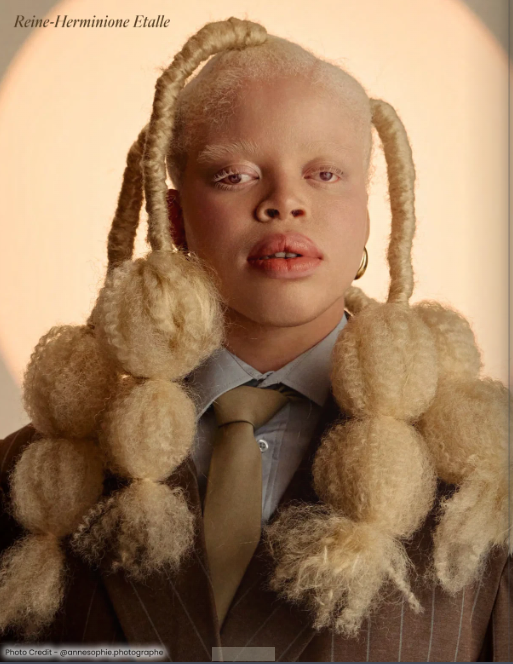
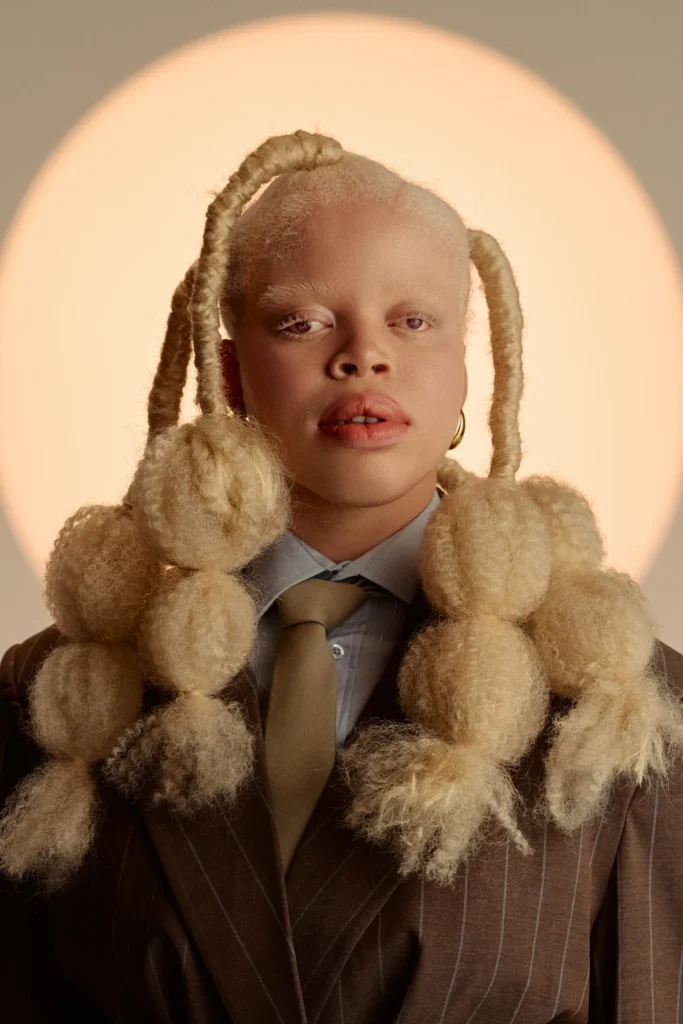
Reine-Herminione Etalle did not enter modelling because she wanted to disappear into beautiful clothes. She entered because she needed to see herself differently. At the time, it was part of therapy, a way to rebuild confidence after years of bullying, staring and having her difference treated as something to explain. Her psychologist suggested modelling as a way to see herself through someone else’s eyes. At first, the idea felt unexpected, then it became a doorway.
“I started modelling to gain more self-confidence, be proud of myself and my albinism, and find myself pretty,” she said. That sentence holds much of Reine’s story. Beauty did not arrive as a sudden discovery. It was something she had to learn to recognize in herself, slowly and deliberately. Modelling became a place where her skin, vision, presence and sense of self could move from being questioned by others to being framed with intention.
Growing up with albinism
Reine was born in Cameroon and lived there until she was six. As a child with albinism, she experienced bullying early. When she moved to France, the bullying changed shape. It became more psychological, quiet and corrosive. The effect was deep. She lost confidence and pride at an age when she was still learning how to understand herself.
Albinism also affected the practical details of daily life. Reine has visual impairment and is photophobic, which means she is very sensitive to light. As a child, she often wore sunglasses and hats indoors or in classrooms. Those items were necessary, but they also marked her as different in spaces where children notice everything.
“When you’re in a classroom wearing sunglasses and a hat, and other children aren’t, you feel apart,” she said.
That feeling of being set apart stayed with her, but it did not become the whole story. Over time, Reine began to turn visibility into something she could control. In front of the camera, the difference that once made her feel exposed became part of how she shaped her image, confidence and presence.
Learning the Industry
Her first steps into modelling were not glamorous. She was 18, not very active on social media and unsure how the industry worked. She began by searching Facebook groups in Paris, where photographers, models and creatives looked for collaborations. Many of her early shoots were collaborative portfolio-building sessions, often known in the industry as TFP, where models and photographers work together in exchange for images rather than payment. It was useful, but also difficult. She was young, alone and learning how to protect herself in an industry where not every person has good intentions.
Those early experiences taught her to be alert, but they also taught her how to build relationships. Reine now understands modelling as a network of photographers, stylists, designers, agencies and people who remember how you made them feel. She believes kindness matters, not as performance, but as part of the work.
“You have to be really nice with people because you don’t know who can recommend you,” she said.
The shoot that stayed with her
One of the most meaningful moments in her career came during a shoot in Amsterdam. It was her first time travelling alone for modelling, and the project brought together people with albinism from different places. The shoot supported an association that helps people with albinism in Africa by sending sunscreen, hats, sunglasses and medical support.
It was not the biggest or most famous job, but it stayed with her. She travelled to a new country, improved her English, met other people with albinism and spent the day exchanging stories about advocacy and awareness. The experience showed Reine what fashion can do when it moves beyond image. It can connect people who have been made to feel alone and turn beauty work into community work.
Fashion as mood and message
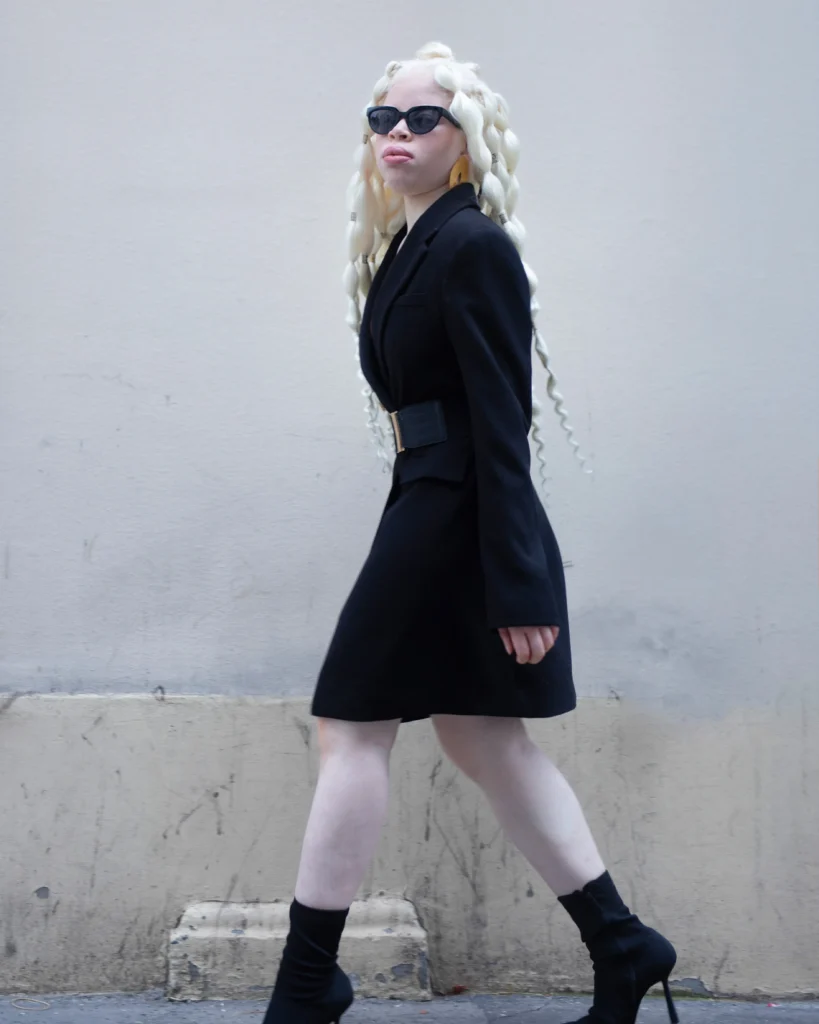
Her relationship with fashion is personal, expressive and exacting. In everyday life, Reine likes to be well dressed. She enjoys clothes that speak before she says a word. Basic does not interest her. Mood does. A look can be classy, playful, dramatic or soft, depending on the day. She likes clothing that carries a point of view.
“I like when your dressing is telling something,” she said.
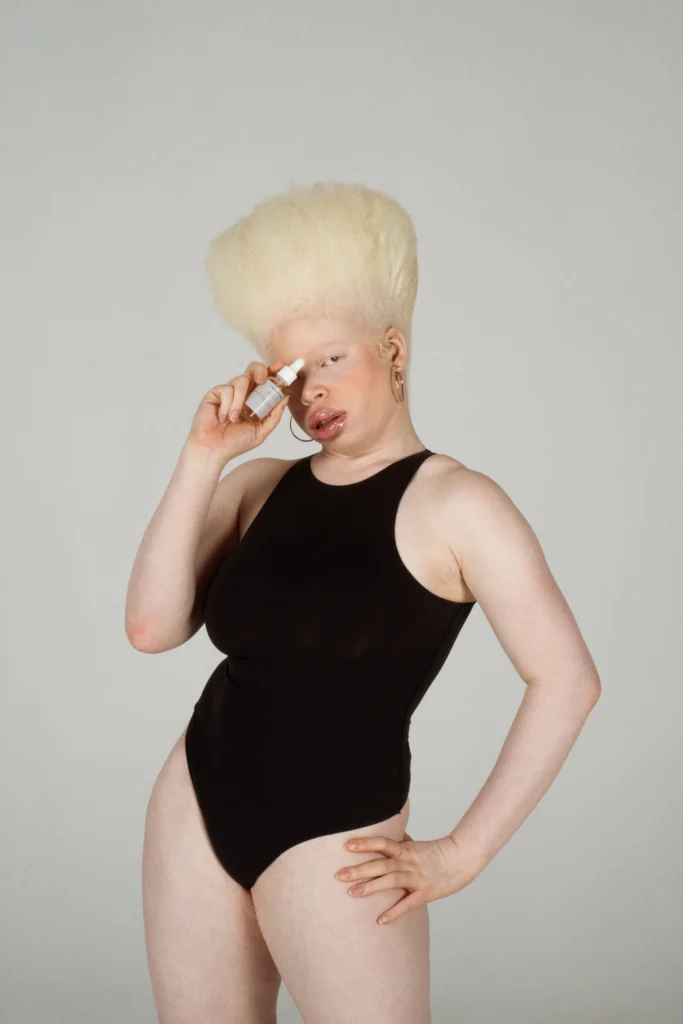
Beauty is part of that language, but her approach is careful. Because of her albinism and skin sensitivity, she prefers natural and dermatological products. She uses face cream, body cream and a little lipstick. She loves her natural skin, though she recognizes that accepting albinism can be difficult for others who have grown up with shame or exclusion.
Becoming someone else and herself
On set, Reine’s style changes again. She describes herself as feeling like an actress. When she steps in front of a camera, she becomes someone else and herself at the same time. That duality is part of the thrill. Modelling allows her to play with character, mood and fantasy without leaving her own body behind.
One shoot for Iconic Artist magazine stands out. She remembers the red lipstick, the styling and image of herself holding the magazine that carried her work. The photographer became an important figure in her life, someone she describes with affection as “mom” because she helped introduce her to the fashion world. That cover marked a professional milestone and carried a deeper personal meaning. After years of feeling set apart by sunglasses, hats and people’s cruelty, she was now seeing herself represented with beauty, intention and respect.
An industry still catching up
Reine is honest about the fashion industry’s uneven progress. She has seen moments when modelling felt inclusive, with more body-positive models and more Black models appearing in campaigns and on runways. Still, she worries that the industry is shifting back toward very thin bodies, especially in France. To her, inclusion is not moving quickly enough.
She also thinks sustainability must be treated carefully. As someone who studies sustainability and strategy, she knows how often the word can be used without real change behind it. Her hope is that more models will create their own brands and projects, especially projects that are closer to real people and real bodies.
The full image
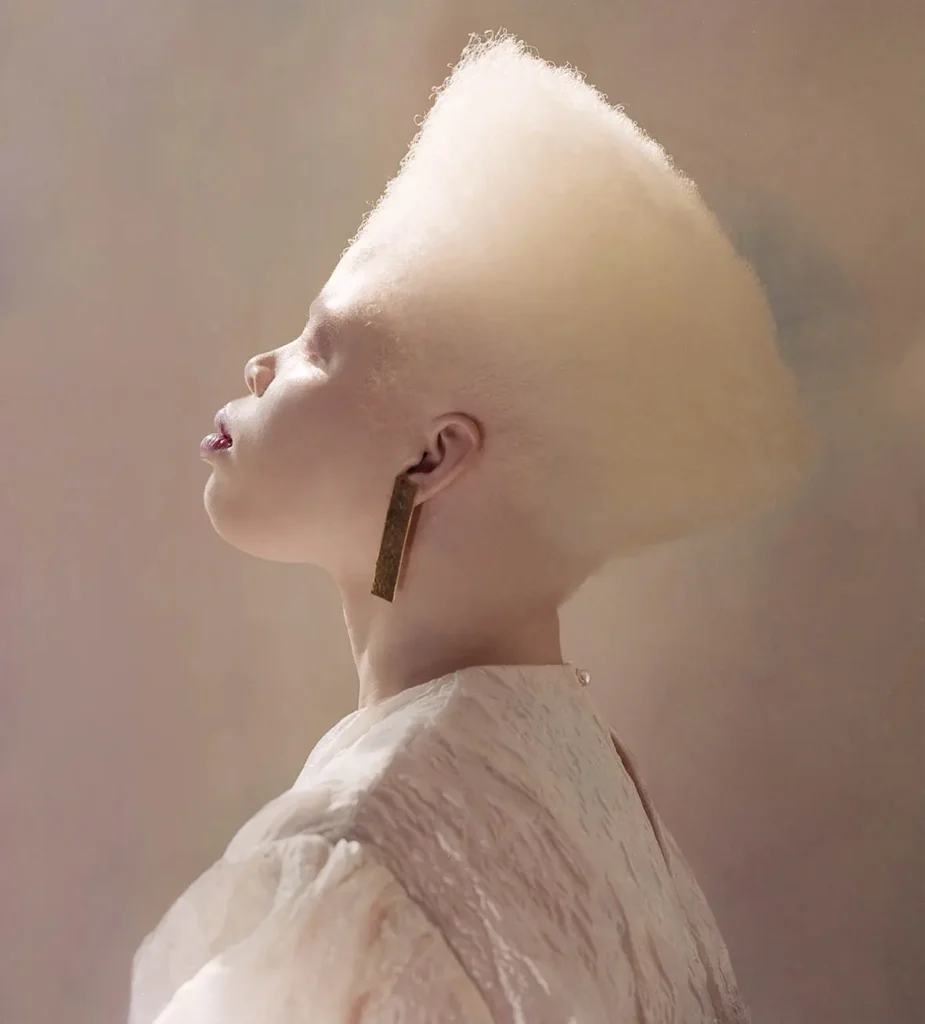
That desire for fashion to feel closer to real people also reflects the way Reine understands herself. She is not interested in being reduced to one feature, one condition or one kind of image. She is smiley, ambitious, stylish, visually impaired, photophobic, proud of her albinism and still becoming. She calls herself iconic with a laugh, but there is truth in the word.
Her modelling journey began as therapy, but it has grown into something more deliberate. Each shoot, red lip, big dress and carefully chosen outfit gives Reine another way to define herself on her own terms.
Fashion is one of the places where Reine takes control of the image. After years of being looked at for her difference, she now decides what people meet first: the styling, mood, confidence, softness, ambition and the person behind it all.
A FEW LITTLE THINGS
Coffee or tea on shoot days?
Coffee.
Favourite music to get into “model mode”?
Telepatía
Heels or sneakers?
Heels, but comfortable ones.
City shoe would love to shoot in?
New York.
Dream brand to work with?
Zimmermann
Accessory you never skip?
Earrings or watch
Something practical you always carry that people wouldn’t expect?
Foldable ballerina flats to put in her bag when she wears heels
A look you’ve worn that changed how you saw yourself?
Cocktail dresses, princess-style dresses and especially big dresses with dramatic shoes
One thing people would be surprised to learn about you?
She is interested in everything and wants to learn as much as possible, from investing and mathematics to “geek things.”