


Listen to this Article
Adaptive fashion is often discussed in terms of function: magnetic closures, hidden zippers, seated tailoring, stretch fabrics. Practicality tends to dominate the conversation. Style, meanwhile, is frequently treated like an optional extra.
But for many disabled people, getting dressed carries far more weight than practicality alone. There’s identity, confidence and the quiet relief of finally seeing yourself reflected in what you wear. That is the space May Marigold is boldly trying to claim.
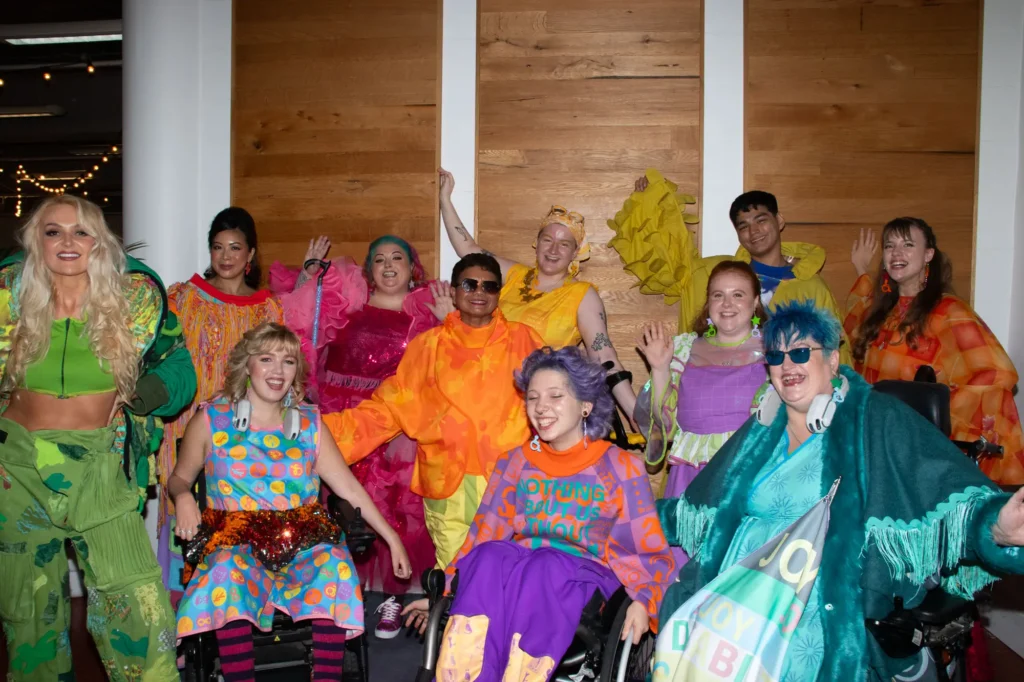
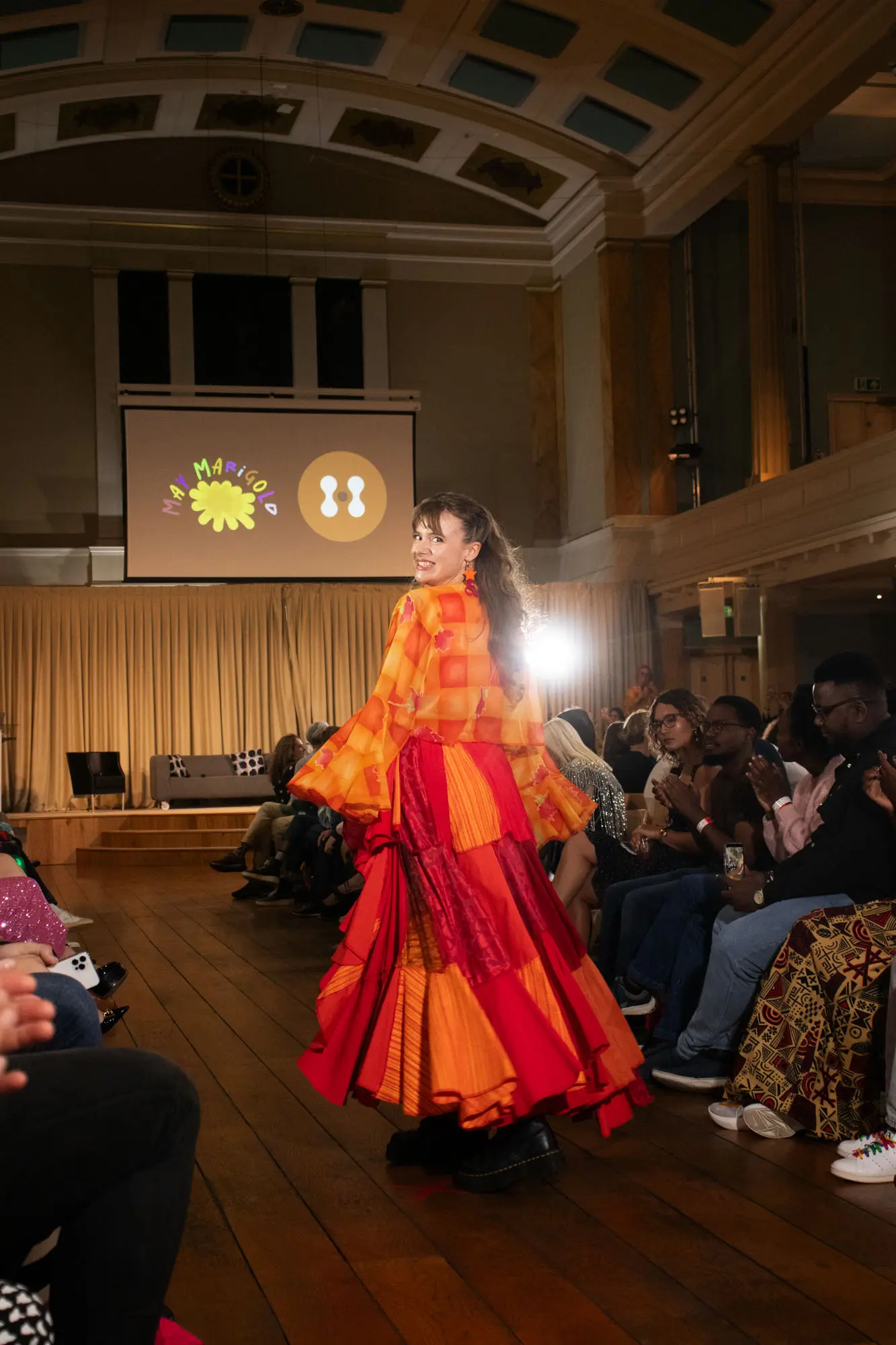
Founded by designer May Guantlett through her own lived experience, the brand approaches adaptive fashion through a very different lens. Not one rooted in clinical aesthetics or “good enough” basics, but in colour, personality and what she repeatedly describes as disabled joy.
“I’m quite a fun dresser creating fun garments,” she said while explaining how difficult it had been to find clothing that reflected both her personality and her practical needs. That frustration will feel familiar to many readers. Adaptive fashion still exists in a narrow corner of the industry, where muted colours, repetitive silhouettes and medically inspired designs often dominate. Clothing may technically “work,” but that does not mean it feels expressive, exciting or personal.
May has a phrase for the opposite of what she creates. “NHS gray.” It is the color of prescribed crutches, standard-issue wheelchairs, the medicalized version of disabled life that treats the body as a problem to be managed rather than a person to be dressed.
Adaptive fashion, she argues, has inherited too much of that energy. There is a difference between adaptive clothing and adaptive fashion, and the industry has not yet fully reckoned with what that means. Functional is not enough, gray is not enough. And “adaptive” cannot become a marketing label slapped on products that do not actually serve the community they claim to reach.
“If it is adaptive for one person but causes more problems for another, then how do we make sure it is still inclusive?” she asks. It is a question the whole sector needs to sit with.
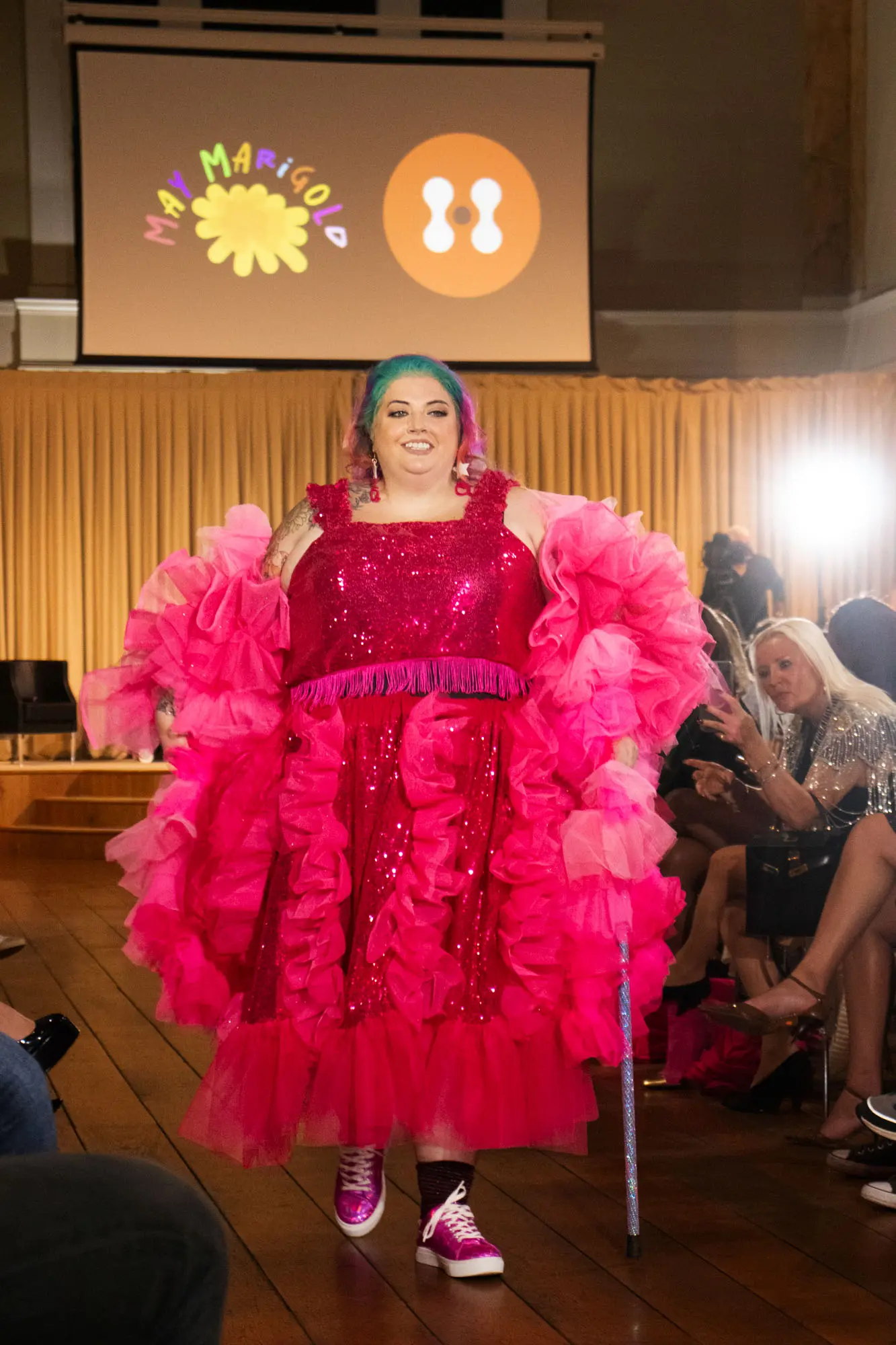
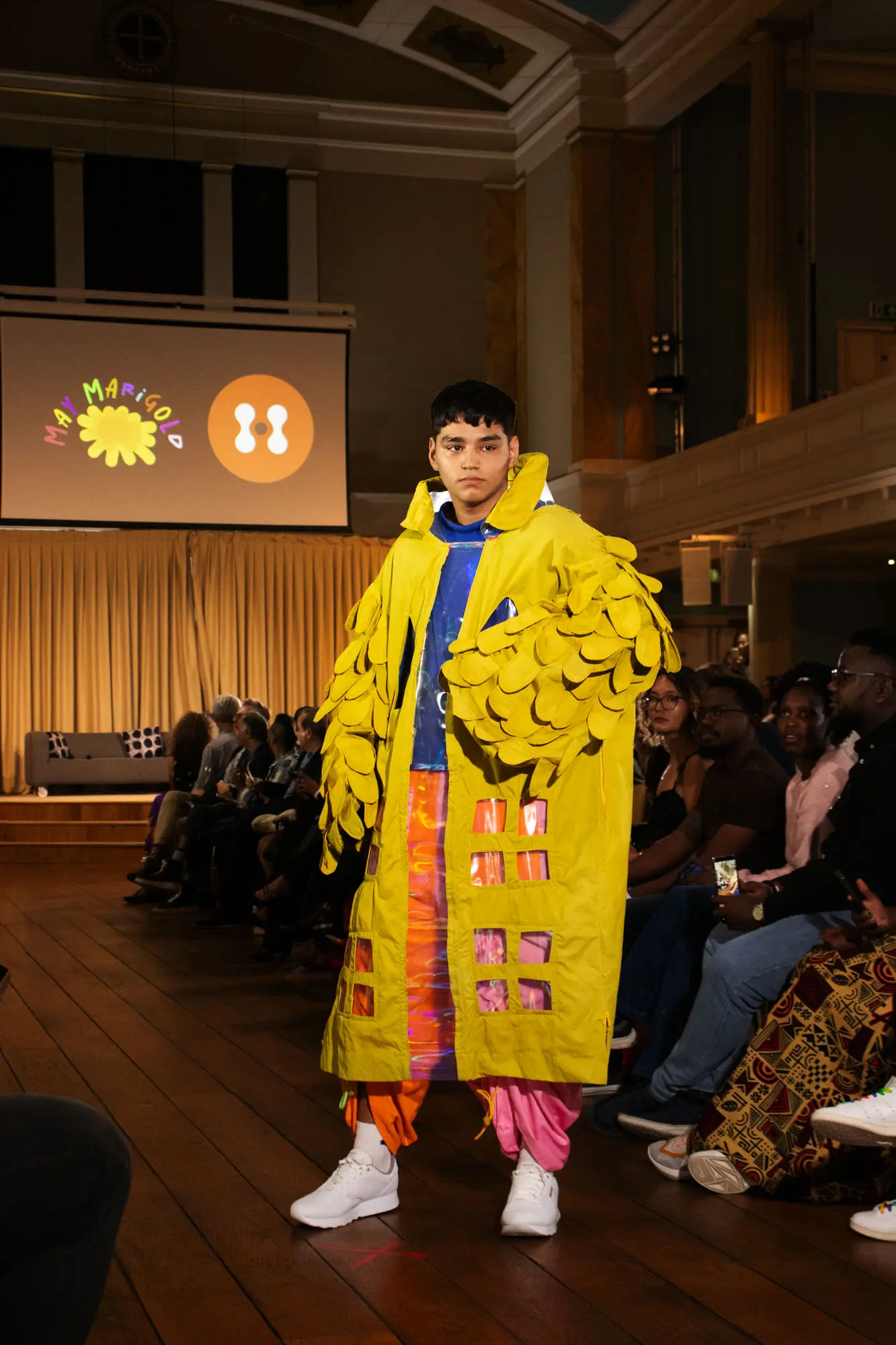
May remembers those clothing frustrations from an early age. As someone who loves the colour yellow so much that it fills her wardrobe, she often struggled to find pieces that matched her style while also accommodating her needs. When she wore a knee brace, leggings became the easiest option because they worked underneath it comfortably. Later, as a wheelchair user, different considerations emerged. Clothing needed to fit well while seated, avoid catching in wheels and remain comfortable from a sensory perspective.
What she could not find, she started creating herself.
The idea for the brand began while she was at university, where conversations with other disabled people quickly revealed a shared feeling. Clothing existed, but much of it did not feel like them. People wanted to go out with friends, attend parties and wear something joyful, not simply settle for garments designed around convenience. That distinction matters.
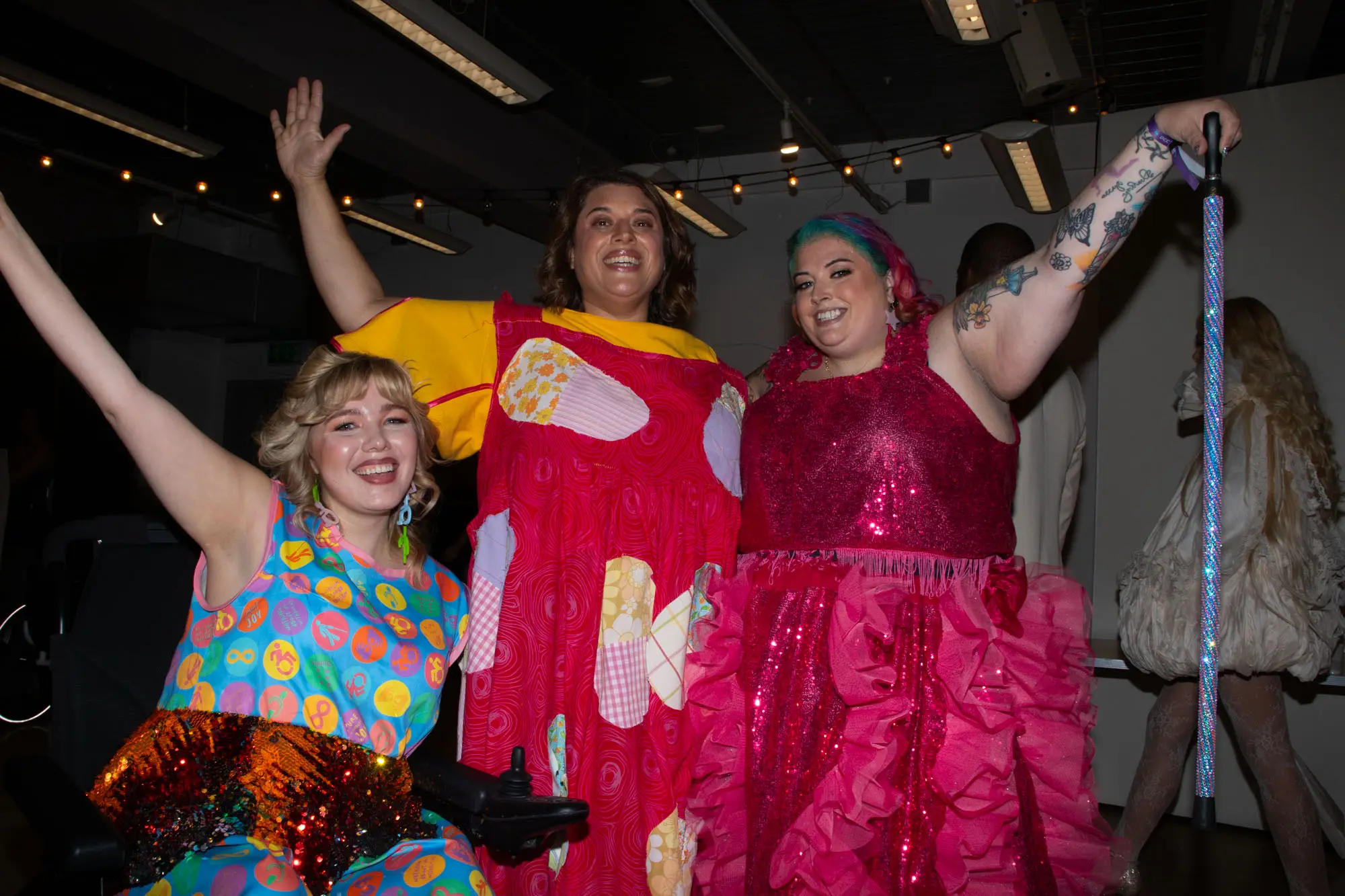
There is a distinct difference between clothing that merely accommodates a disability and fashion that allows someone to express themselves fully. Most of the clothing are functional but rarely uplifting, so her work pushes in the expressive direction: bright colours, personal details and emotional connection . . . clothing designed not only to fit bodies, but to support confidence and self-expression. And at the centre of that process is collaboration.
Rather than designing for disabled people from a distance, May works directly with individuals throughout the creative process. Conversations go beyond sizing and measurements. She wants to know:
- what colours people love
- what fabrics irritate them
- what movements feel difficult, and
- what makes them feel good about themselves
Sometimes the answers are deeply practical and at times they are surprisingly emotional.
- One person may need greater flexibility through the shoulders
- Another may need softer textures to accommodate sensory sensitivities
- Someone else may simply want clothing that feels more aligned with their personality after years of dressing purely for function

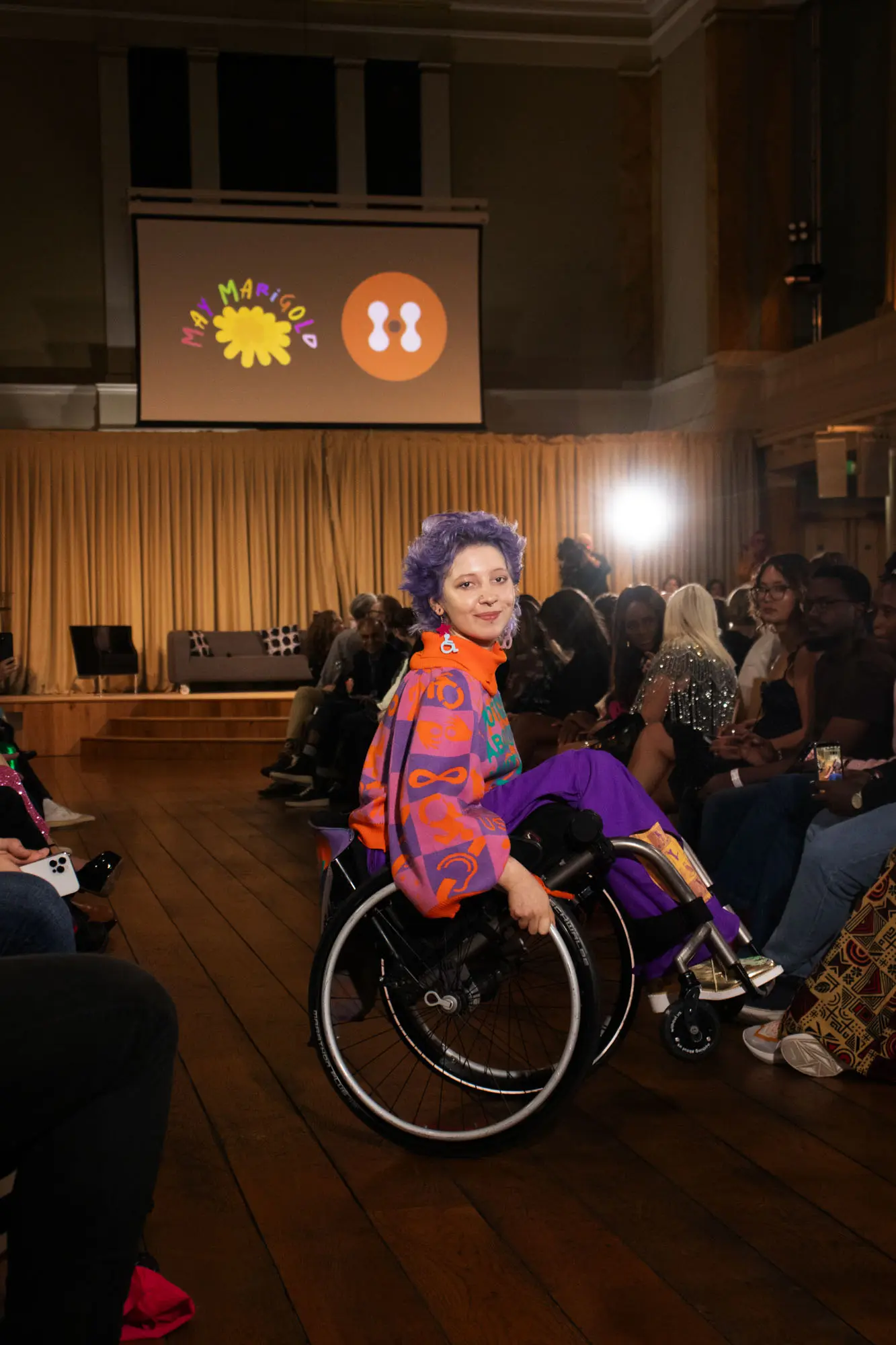
May also believes some of the best ideas come from disabled people and carers who have already been adapting garments themselves for years. Parents cutting openings into clothing, carers altering seams, individuals experimenting with solutions out of necessity because suitable clothing did not exist commercially.
Those experiences hold value. “Every idea is valid,” she said. “In adaptive fashion, the best solutions come directly from the people navigating disability every day.”
With designs shaped by real-world experience rather than assumptions, this becomes less about niche adaptation and more about improving clothing design overall.
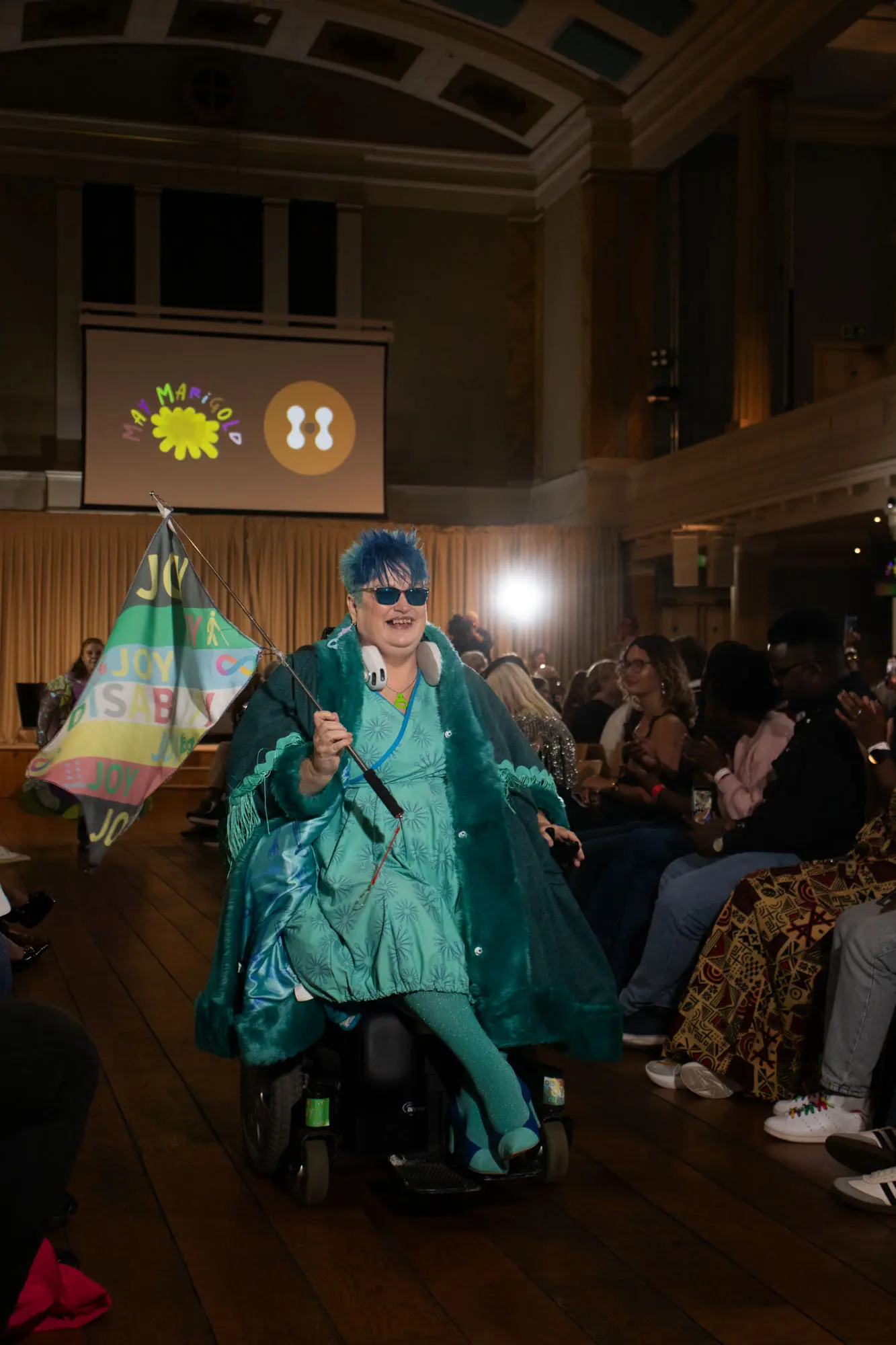
The emotional impact of that work can be profound. May recalled collaborating with a university professor who uses an electric wheelchair. Together, they designed a teal coat and dress tailored specifically for her seated needs and professional style. Hidden within the dress pattern were tiny spoon motifs referencing Spoon Theory, something meaningful to the professor’s academic work.
The outfit was later worn at London Fashion Week.
According to May, watching the professor confidently move through that space while fully embodying the outfit was emotional for everyone involved. Yes, the clothing did fit her correctly, but it did lots more than that! It reflected who she was.
That is the power adaptive fashion can hold when disabled people are included not just as consumers, but as collaborators and creators.
But adaptive fashion is expensive. May does not shy away from saying so. It is already expensive to be disabled in general, and high-quality adaptive clothing often sits at a price point that excludes many of the people it is designed for. So, May Marigold has built a practical response into its model. The brand’s Reimagined Adaptive line takes pre-loved clothing and transforms it. Charity shop finds, dead stock, garments heading for landfill . . . these become the canvas for adaptive features and the brand’s signature colour and personality.
“If we start bringing in all of these different elements and focusing on the planet side of it, we can bring down those prices,” May explains.
The approach is practical and straightforward. Clothing that might otherwise be discarded is reworked into something functional, expressive and personal again. Pre-loved starting points lower costs. Sustainable construction helps garments last longer. And clothing that genuinely works for someone’s body and lifestyle is far less likely to be discarded after only a few wears.
Sustainability and accessibility, in May’s view, are not separate values. They require each other.
Looking ahead, May hopes to see more disabled designers entering the fashion industry and shaping adaptive fashion from within. She wants more conversations in schools, more visibility in fashion spaces and ultimately more choice for disabled consumers.
Disabled joy does not belong on the sidelines of fashion. Clothing should reflect personality, spark confidence and allow people to feel truly seen in what they wear. Accessibility and style should never exist separately!
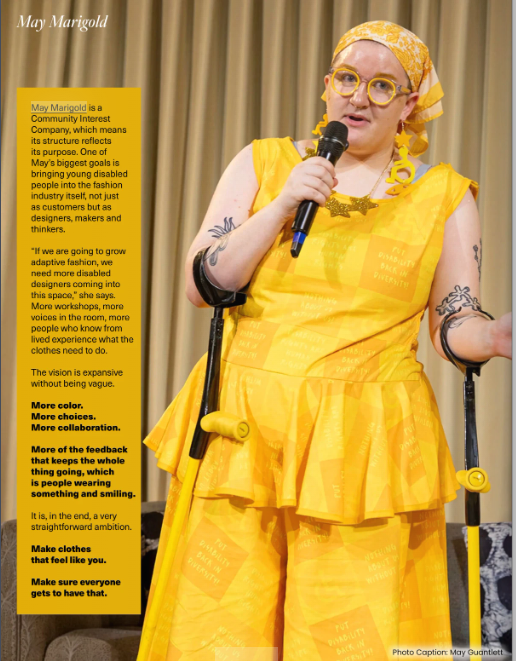
May Marigold is a Community Interest Company, which means its structure reflects its purpose. One of May’s biggest goals is bringing young disabled people into the fashion industry itself, not just as customers but as designers, makers and thinkers.
“If we are going to grow adaptive fashion, we need more disabled designers coming into this space,” she says. More workshops, more voices in the room, more people who know from lived experience what the clothes need to do.
The vision is expansive without being vague.
More color.
More choices.
More collaboration.
More of the feedback that keeps the whole thing going, which is people wearing something and smiling.
It is, in the end, a very straightforward ambition.
Make clothes that feel like you.
Make sure everyone gets to have that.