




Listen to this Article
The brand emerged from a simple belief: functional clothing should still feel fashionable, dignified and contemporary.
When Katharine Perry walked into her father’s long-term care room and saw him in the adaptive clothing nurses had recommended, her heart sank. Her father, a proud farmer, a man with beautiful penmanship who took great care of his appearance, was wearing something that looked tired, ill-fitting, and utterly unlike him.
“My dad was a proud man,” she says. “He wanted to look good all the time and feel good.”
That moment of quiet devastation became the seed of something extraordinary. Perry, a former special education teacher of 21 years, founded Adaptt Apparel out of a simple, urgent conviction: that people living with disabilities or mobility challenges deserve clothing that is not only functional, but genuinely beautiful.
The problem nobody was solving
Adaptive clothing, garments designed to accommodate physical limitations, disabilities, or medical needs, has existed for decades. But for most of that time, it has occupied a narrow, overlooked corner of the fashion world. The options were clinical and somber, designed, it seemed, to make someone disappear rather than feel seen.
“When you say adaptive clothing, automatically we think old,” Perry says. “We still hear from people, oh, I’m not there yet, I don’t need it. That’s the stigma we want to get away from.”
The market wasn’t just aesthetically lacking, it was also failing on quality. Perry discovered that garments available for her father’s care home couldn’t withstand the high-heat industrial washing cycles common in long-term care facilities. Clothing would arrive back from laundry pilled, shrunken, ruined after a single wash. So, she started designing her own.
A brand built on lived experience
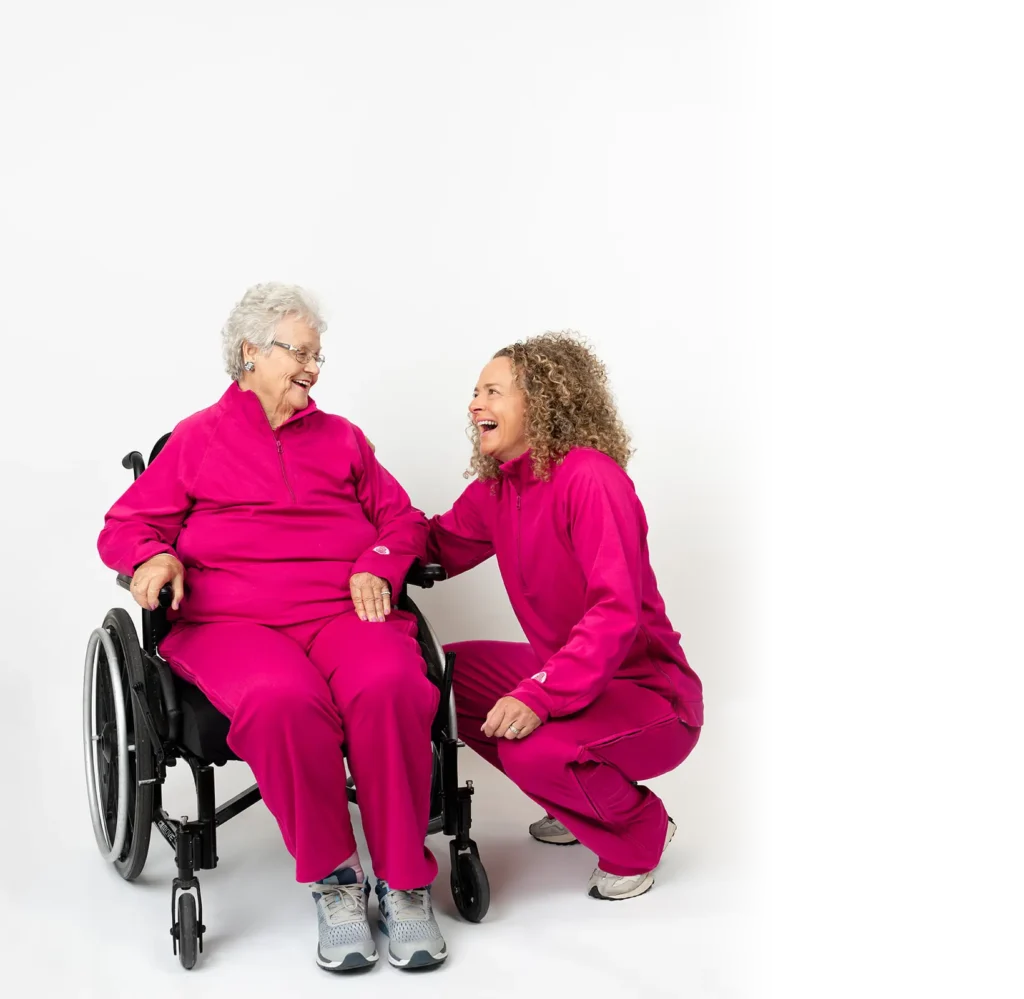
What sets Adaptt Apparel apart from other attempts at accessible fashion is the depth of understanding Perry brings to every design decision. She isn’t designing from the outside in. She has spent years in nursing homes and long-term care facilities, first as a daughter, now as an essential caregiver for her mother, who is in the late stages of Alzheimer’s and uses a wheelchair.
“I was always afraid I was going to hurt my father when I was getting him dressed,” she says. That fear, shared by countless family caregivers and professional support workers alike, shaped the company’s entire design philosophy.
Adaptt’s clothing is engineered with both the wearer and the caregiver in mind:
- A top, for example, might be designed to drape over someone’s head with an open zipper along the side, so a person without overhead mobility doesn’t have to raise their arms at all.
- For someone going through dialysis or cancer treatment, a sleeve can open up at a moment’s notice, eliminating the need to fully undress for medical access.
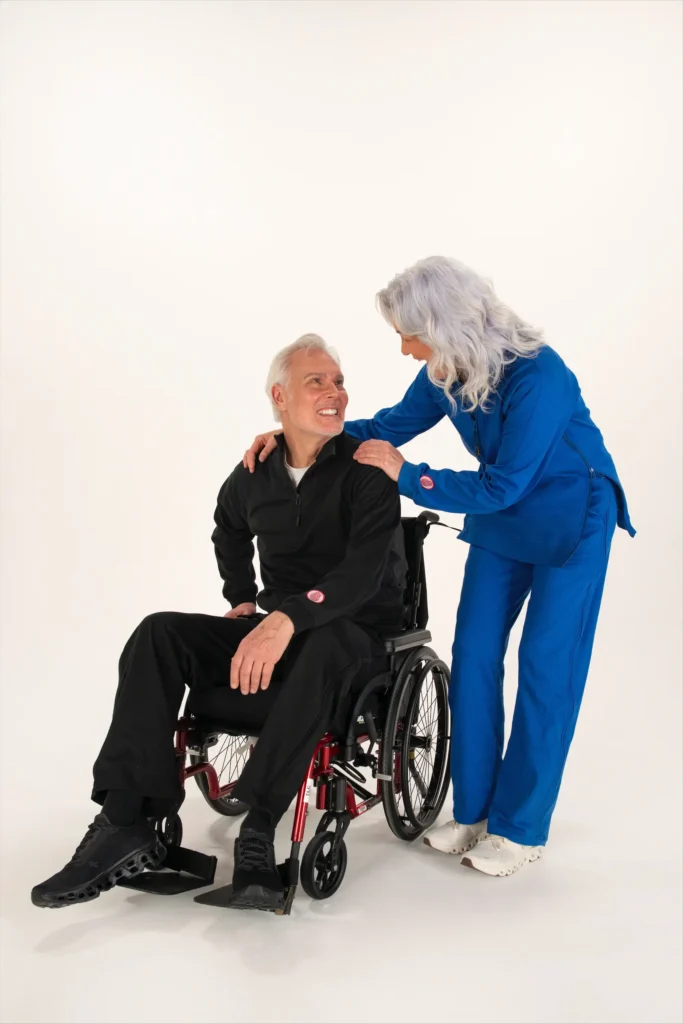
- For wheelchair users, a puffer poncho drapes elegantly over the chair with discreet slits at the back, functional, but completely invisible to the eye.
“There’s a huge emotional piece,” Perry explains. “If getting dressed was hurting someone with dementia, you’d see a behavior come out of that. We have less of those behaviors now. There’s more connection, more calm.”
Changing what “adaptive” looks like
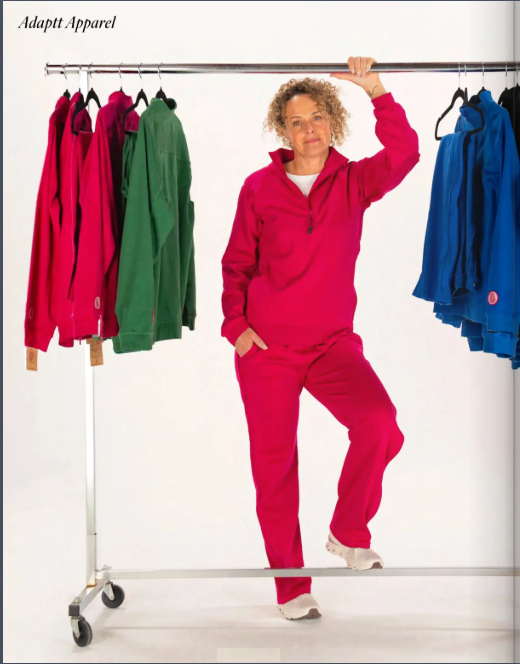
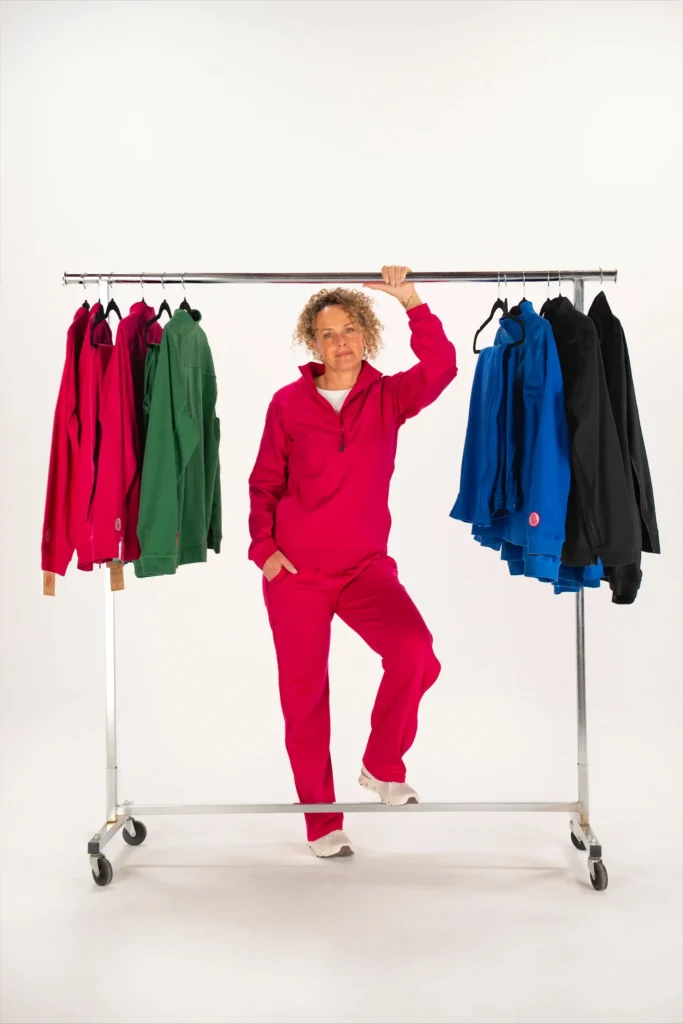
Adaptt’s colour palette is deliberately bright and contemporary. Their designs are meant to sit alongside mainstream fashion, not apart from it. The brand has attracted professional athletes as ambassadors, developed partnerships with NFL alumni, and counts among its customers people who simply want comfortable, well-made clothing, not just those with medical needs.
“Anyone can wear Adaptt apparel,” Perry says. “It doesn’t scream adaptive clothing. That’s the real beauty of it.”
The company works with a tech pack designer in the UK and a manufacturer in India, chosen partly because the facility runs a school program for students with special needs, with leftover fabric repurposed into bags and blankets. Quality control, cross-time zone communication, and building manufacturing relationships from scratch have all been part of a steep learning curve for Perry, who freely admits she didn’t know what GSM, a measure of fabric weight and thickness meant when she started.
“Everything I do every day is a learning curve,” she laughs. “I’m okay with that.”
The vision is global
Two years into building Adaptt, Perry is clear-eyed about the long game. The brand is gaining serious media traction, with features spanning major Canadian outlets and a forthcoming Oprah profile. A children’s line is in development and a puffer poncho inspired by high-street aesthetics is also on its way.
But at its core, Adaptt remains deeply personal. The company’s bright pink logo is taken directly from her mother’s thumbprint. It reflects how closely the brand is tied to Perry’s experience caring for both of her parents through Alzheimer’s disease and mobility changes.
That experience continues to shape how she thinks about adaptive fashion today. For Perry, clothing is tied to dignity, comfort and identity as much as it is to function.
“Just because someone is in a long-term care home doesn’t mean they still can’t look good and feel good,” she says.
Her father’s favourite saying was “there’s a time for everything. Before his Alzheimer’s progressed, he wrote the phrase down in his careful penmanship, leaving the closing quotation mark unfinished. To Perry, it felt symbolic, as though the story was still unfolding.
Now, as Adaptt grows beyond its caregiving roots into a broader conversation around accessible fashion, Perry believes that time has arrived.
For her, the future of adaptive fashion is not about creating a separate version of style for disabled people. It is about recognizing that comfort, accessibility and fashion should never have been treated as separate ideas in the first place.