
Listen to this Article
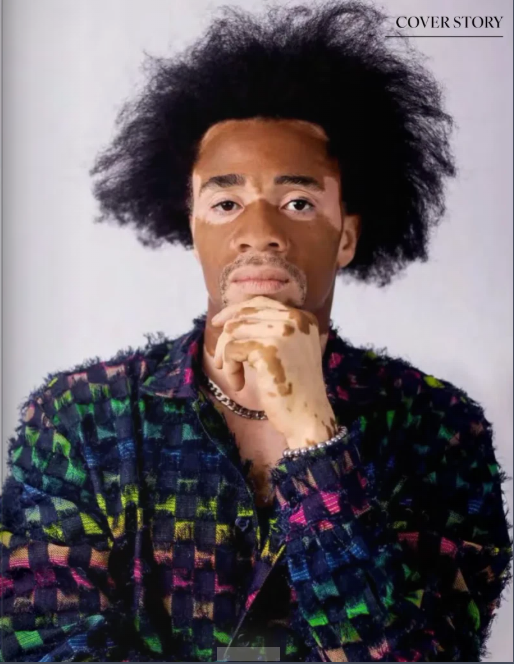
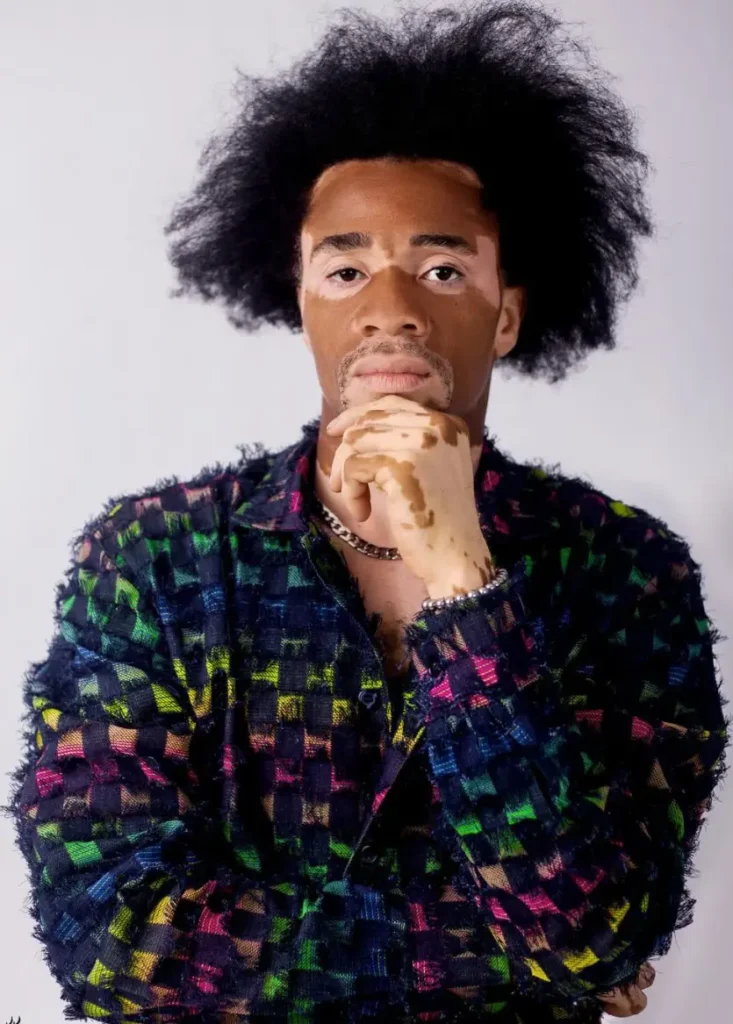
Robert Essel arrives with pattern, confidence and purpose. For the Ghanaian model and advocate, the world of fashion transcends the mere wearing of clothes. Fashion has become his language. It is the introduction even before he speaks, turning attention and curiosity into education and making visible difference impossible to ignore.
His vitiligo is central to that story. It is his beauty, part of his identity and the bold message he carries into every room, runway and photo shoot. The world often expects beauty to follow one narrow pattern, but Robert offers something more powerful. He offers proof that difference can be the centre of the image.
Fashion became a platform for him at a time when many people with visible differences in his community were still hiding. He speaks about people with vitiligo, skin conditions and disabilities who stay indoors because of stigma, bullying and misunderstanding. Some cover themselves when they go out while others avoid public life entirely. Robert knows why. He has felt the staring, was subjected to pointed questions and unsavoury comments that can damage confidence before it has a chance to grow. But he also knows what can happen when one person decides to be seen.
While others shied away from the public eye, Robert chose modelling as a way to stand out, not only for himself but for others like him. When people see him in front of the camera, on a runway or in a fashion image, he wants them to recognize possibility. He wants someone who has been told that they should hide to think, “Robert is out there so perhaps I can get out and be seen too. Is it possible that my difference does not disqualify me from being considered beautiful, does not bar me from ambition or success?”
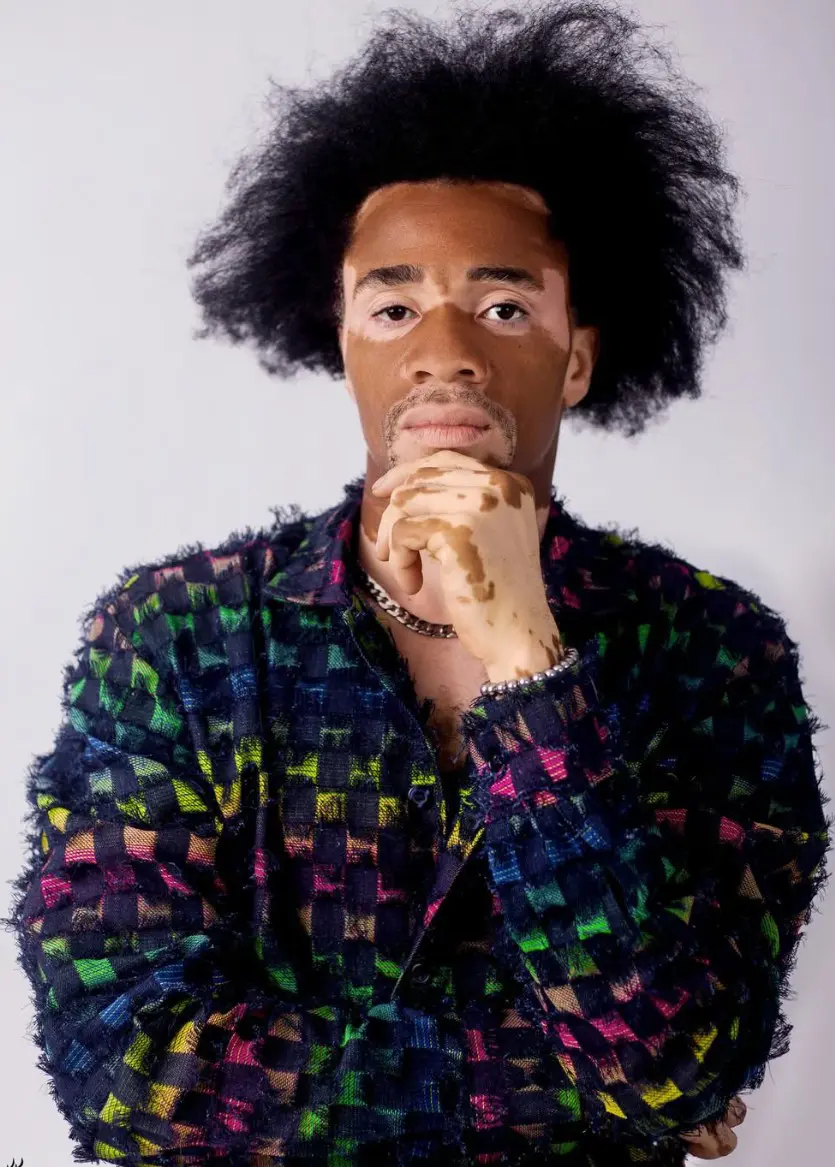
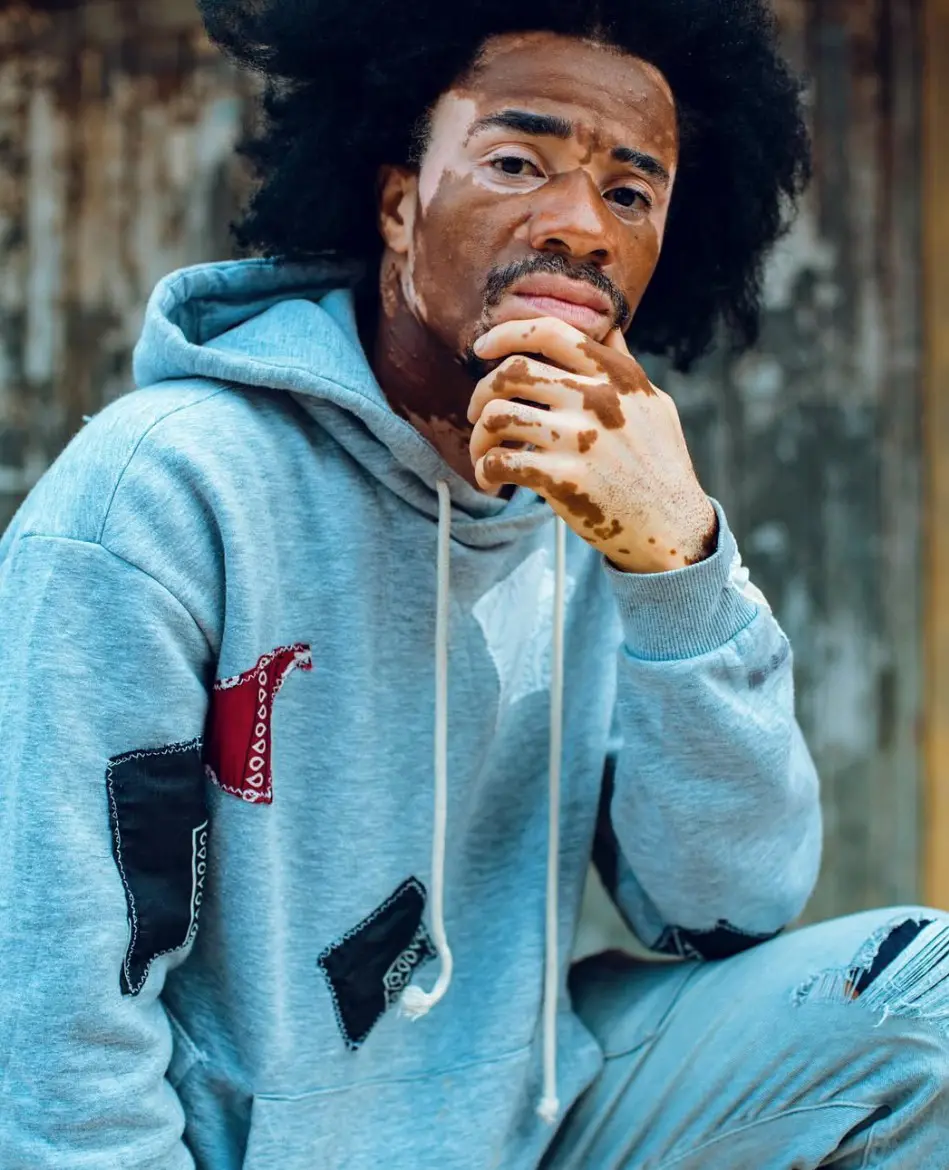
Robert’s deep sense of purpose did not arrive overnight. When vitiligo first appeared in his early 20s, he did not understand what was happening to his skin. Other people did not understand it either and their negative reactions affected him deeply. Some of the comments he received could have easily killed his spirit, he said, and there were many days when he did not want to leave the house.
Over time, that began to change. He came to understand vitiligo not as something to condemn, but as part of what made him beautiful. He began to see that beauty was never about looking like everyone else. It could actually be found in what society does not yet understand.
The first door opened close to home. Friends in his community saw what Robert could not yet fully see in himself and encouraged him to stop covering his skin. Among them was David Agordo (Ogee), who gave Robert the opportunity to appear in his music video. Stepping in front of the camera allowed Robert to experience public visibility in a new way. When the video was released, the response changed how he saw what might be possible. He also credits his friend and manager, Mr. Enam Otega Aheto (Uncle Enam), with nurturing his confidence and encouraging him to speak openly about himself. That support helped turn a private struggle into a public voice, giving Robert the courage to model, advocate and stand before others without hiding.
Since then, modelling has become Robert’s armour. It gives him a way to meet the world on his own terms and turn visibility into advocacy. In front of the camera, he reminds himself, “This is my chance to project myself beyond stigma and show others like me what confidence can look like.” Through fashion, he carries courage, self-acceptance and public presence into spaces where difference is still too often misunderstood. Each photograph holds a message, and each runway appearance becomes a moment of education.
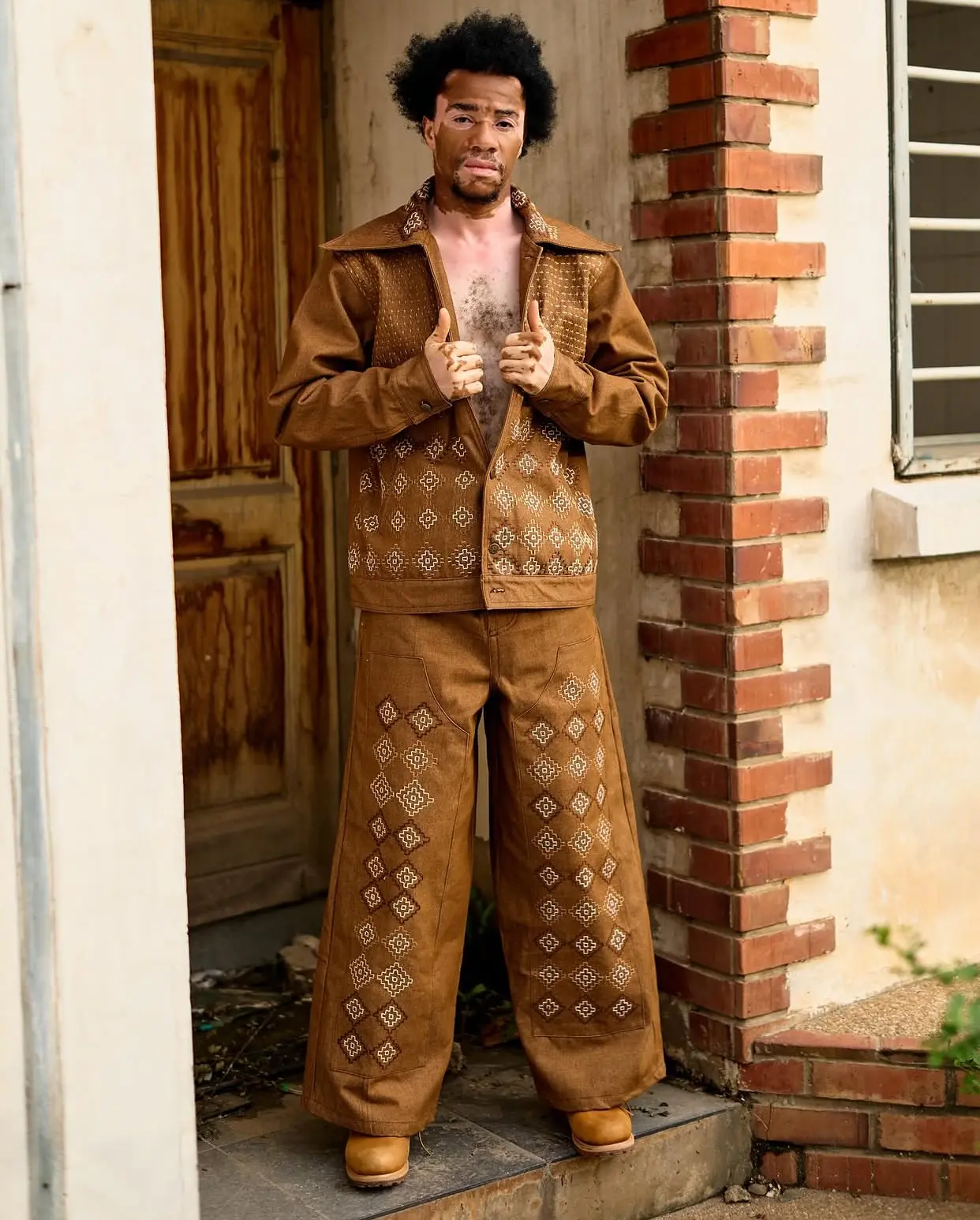
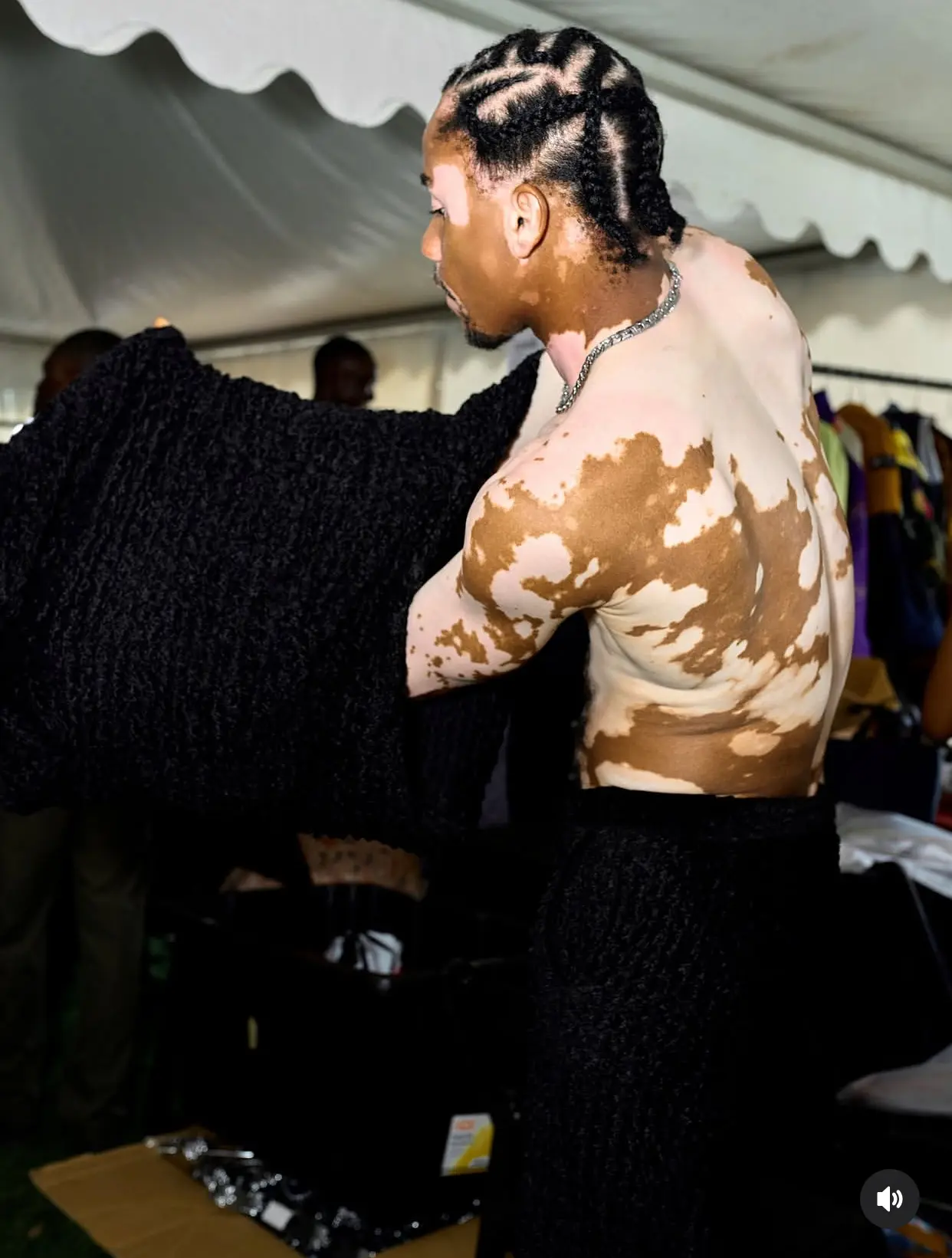
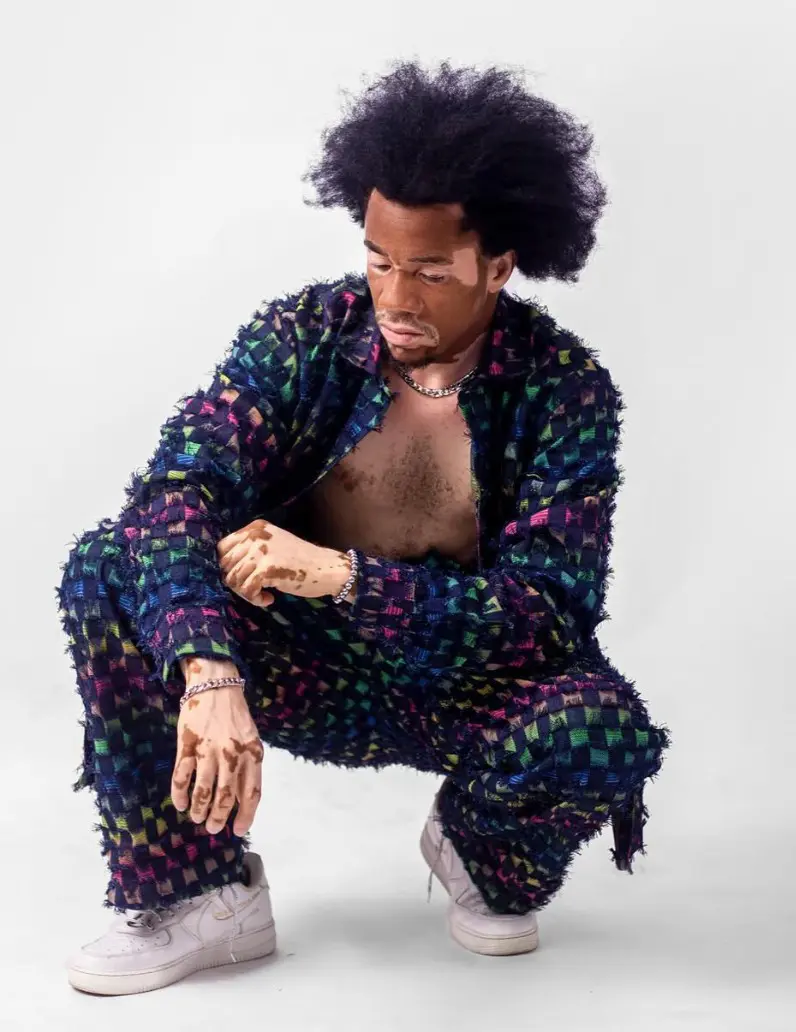
Robert’s advocacy is rooted in the quiet ache of knowing how many people remain unseen because stigma has taught them to hide. He wants people with vitiligo and visible differences to be understood, not feared, pitied or pushed aside. “I want to be that stepping stone for the whole wide world to see,” he says. That sentence is at the heart of his work because it turns his visibility into responsibility. Robert understands that one image can reach places words may not and profoundly connect with someone even before a conversation has the opportunity to begin. Unapologetically, a runway moment can say loudly, without words, that difference belongs in public view. He is not chasing attention for himself alone. He is trying to make his presence useful in that space. By standing where others may not yet feel safe to stand, Robert creates an opening. His visibility becomes a signal to the person watching from the edge of confidence, that person who needs to see someone else step forward first.
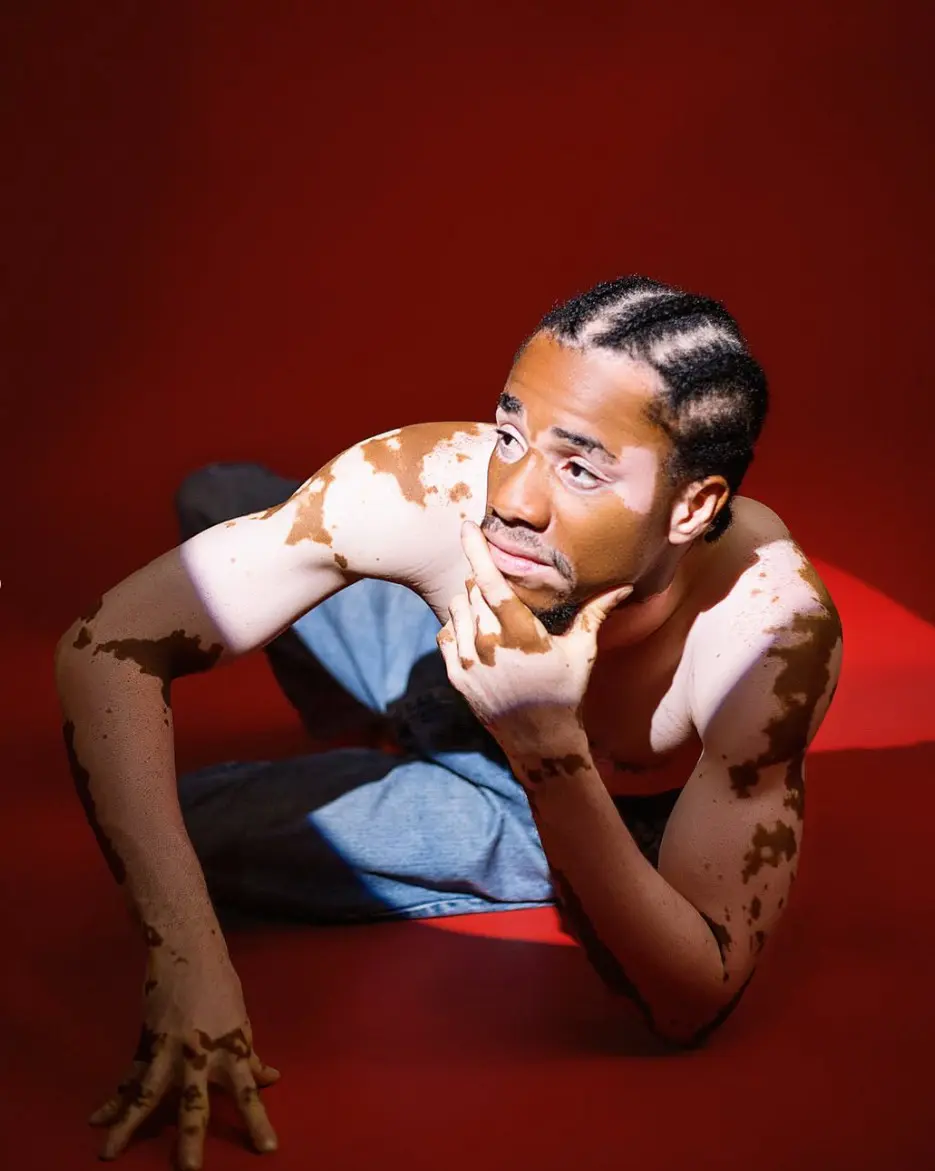
When asked what makes him feel unstoppable, Robert does not name a designer suit or a perfect runway look. He is most confident when he is shirtless, he says, because then his skin can be fully seen. He describes the pattern across his back like a map, similar to a landscape of islands drawn across his skin. What others might have misunderstood, he now reads as art and power.
That shift is at the heart of his story. Robert is not asking fashion to make room for difference out of charity. He is showing that difference gives fashion energy, depth and a new visual language. He believes the industry becomes stronger when it includes people with disabilities, scars, albinism and people with vitiligo. Without them, beauty remains one-sided. With them, fashion becomes more alive.
That belief comes from experience, but also from recognition. Robert understands how powerful it can be to see someone with visible difference occupy space confidently, because those images helped him imagine what might be possible for himself. He looks to Winnie Harlow as a source of inspiration and sees himself as creating a male version of that kind of visibility, shaped by his own Ghanaian identity and advocacy. He also speaks of Michael Jackson as someone he looked to when he was younger, especially because of the public conversation around skin and difference. Today, Robert wants to be a person others can look up to as a role model.
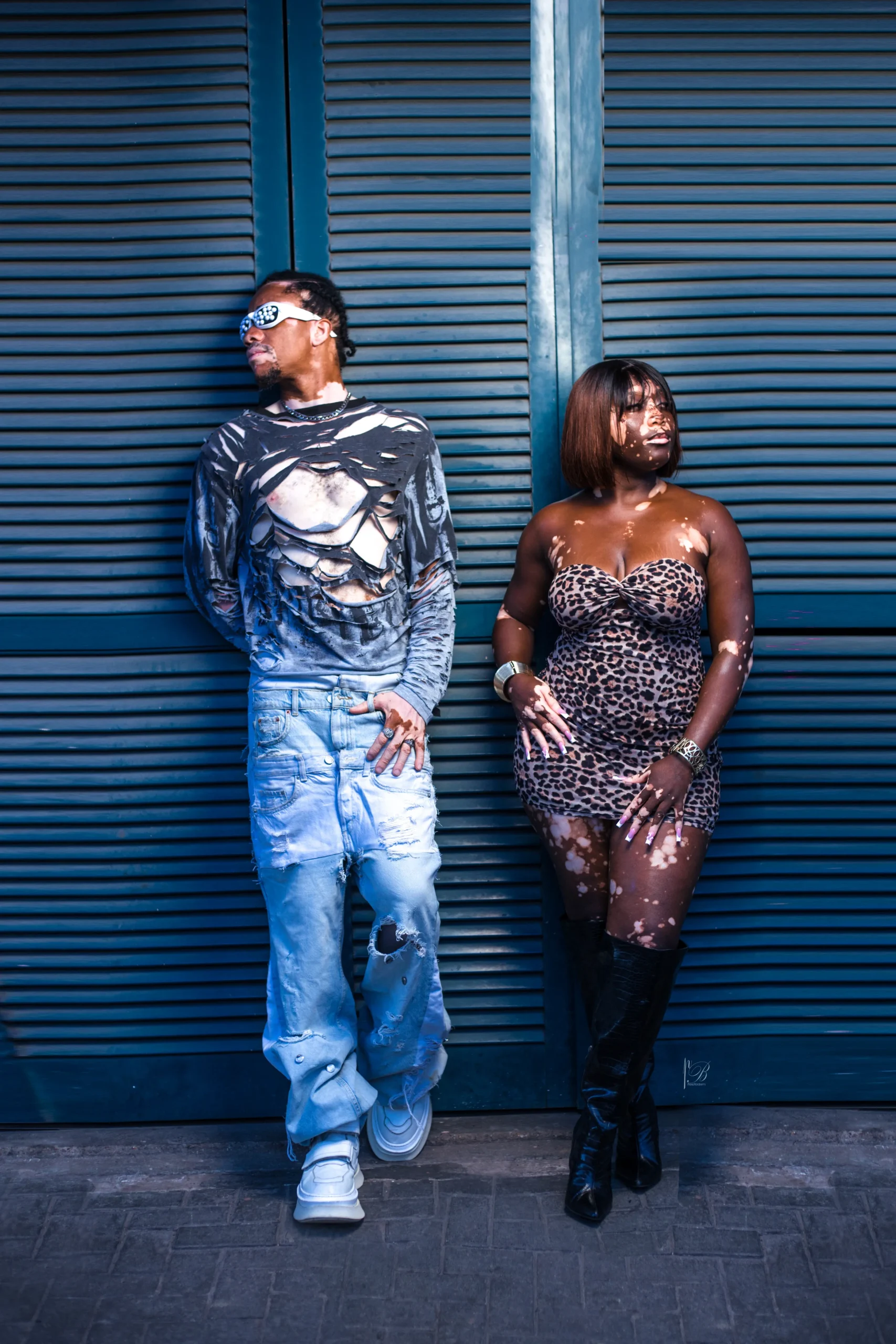
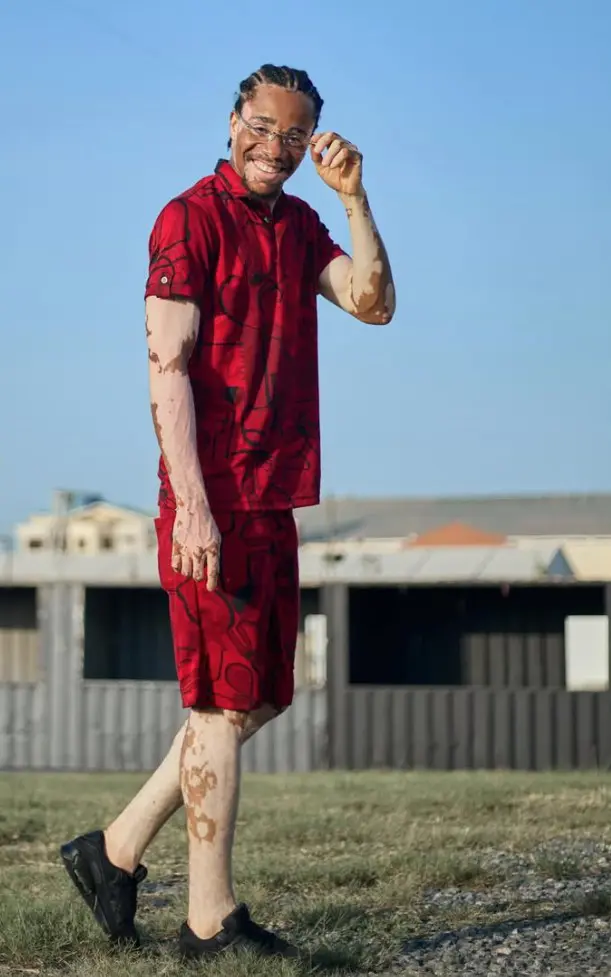
That sense of purpose follows Robert every time the camera comes out. Before a shoot, he takes a deep breath, reminding himself to be himself. Confidence is not simply a feeling for him. It is a practice, a posture and an act of defiance. It is also the decision to stand fully visible in a world that once made hiding feel safer.
His message to designers, casting directors and fashion editors is clear. Let the skin be seen. Do not cover the difference. Light it, frame it and allow it to speak. Beauty does not need to be corrected before it is celebrated.
Robert Essel’s story is not defined by his striking image alone. Its depth comes from what he does with that visibility. Through fashion, he questions the rules that teach people to cover, explain or soften the parts of themselves that make others uncomfortable. His work asks for a wider understanding of beauty, one that can hold difference without turning it into a spectacle. Robert’s difference does not separate him from the world. It gives him a reason to confidently step forward and ask the world to look again, this time without the old assumptions.