









Listen to this Article
1. Prioritize products with easy-open packaging
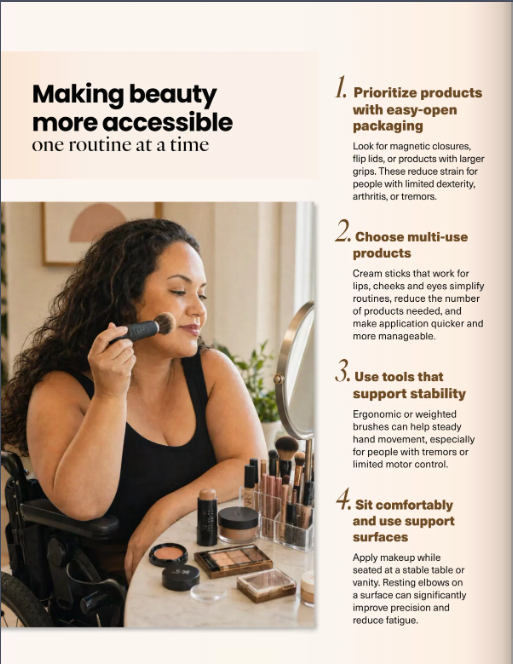
Look for magnetic closures, flip lids, or products with larger grips. These reduce strain for people with limited dexterity, arthritis, or tremors.
2. Choose multi-use products
Cream sticks that work for lips, cheeks and eyes simplify routines, reduce the number of products needed, and make application quicker and more manageable.
3. Use tools that support stability
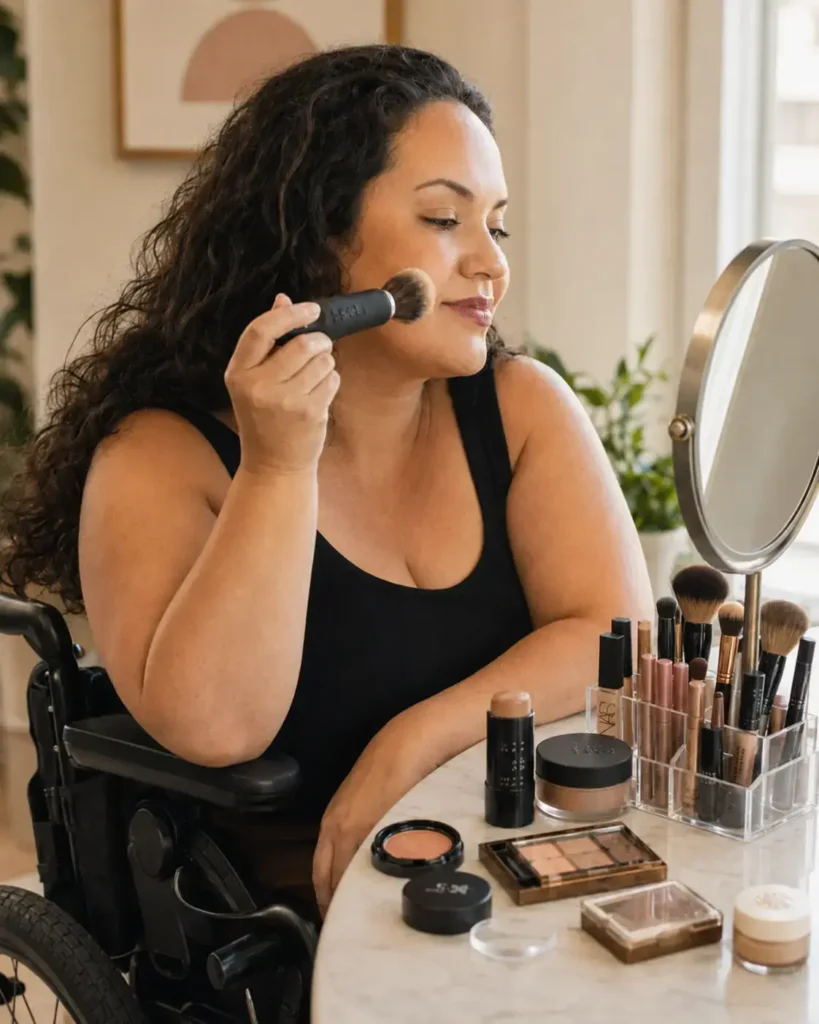
Ergonomic or weighted brushes can help steady hand movement, especially for people with tremors or limited motor control.
4. Sit comfortably and use support surfaces
Apply makeup while seated at a stable table or vanity. Resting elbows on a surface can significantly improve precision and reduce fatigue.
5. Work with tactile or audio cues
Use tactile labels, raised stickers, or apps with voice guidance to identify products and shades without relying on vision alone.
6. Focus on skin prep first
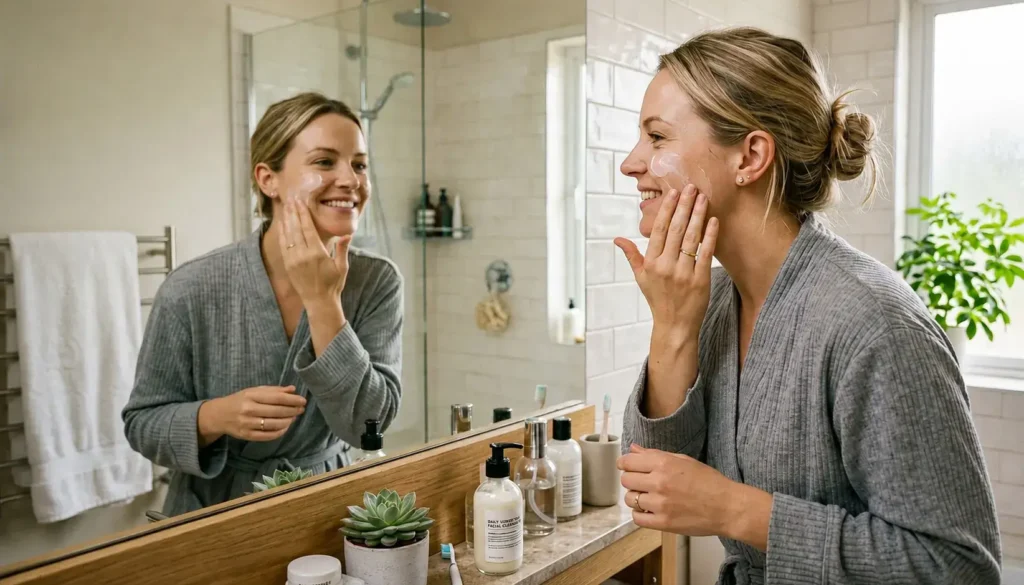
Well-moisturized skin reduces the need for heavy makeup. A good base can make application easier and more forgiving.
7. Simplify eye makeup
Use eyeshadow sticks or cream formulas that can be blended with fingers. Skip complex techniques in favour of one-step looks.
8. Adapt your setup to your vision needs
Magnifying mirrors, adjustable lighting, or even applying makeup by feel can make a big difference. Position tools consistently so they’re easy to locate.
9. Build a routine that works for you
There is no “right” way to apply makeup. Whether it takes five minutes or fifty, the goal is comfort, confidence and self-expression.
10. Advocate for inclusive beauty brands
Support brands that design with accessibility in mind and feature people with disabilities in their campaigns. Visibility drives change across the industry.