

Listen to this Article
Fashion and self-expression
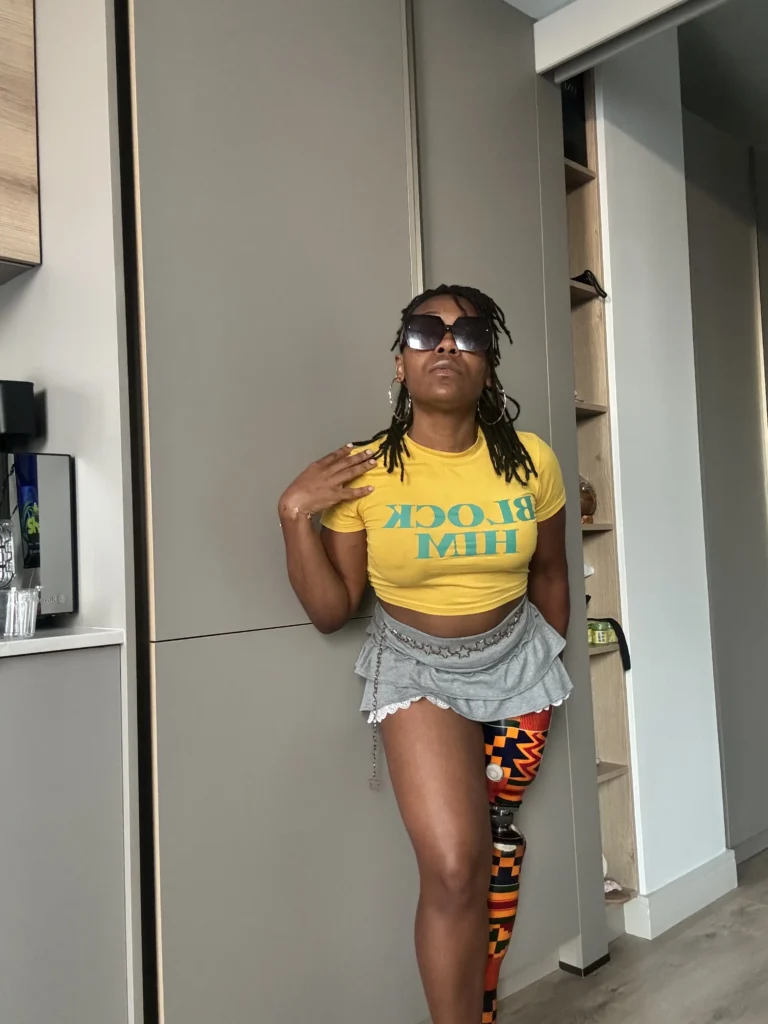
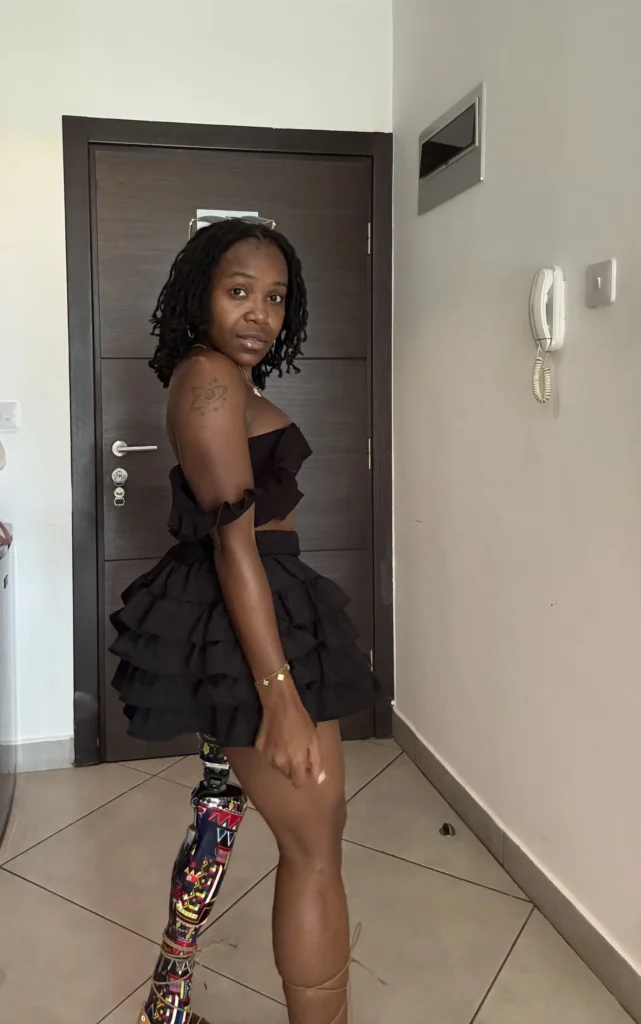
For much of her life, Abena Christine Jon’el, a Ghanaian-American model, advocate, speaker and traveller, hid her prosthetic leg. Shorts were off limits. Skirts stayed in the closet. Long dresses and pants became a form of protection, shaped by years of insecurity and a desire to avoid standing out. Today, she does the opposite. She proudly wears short skirts, fitted outfits and clothing that puts her prosthetic on full display. The shift reflects a profound change in how she sees herself and that transformation sits at the heart of her story.
Abena describes herself as a fiery, unstoppable woman. Growing up in Chicago, she was the child who climbed the tree after being told she could not, and the girl who pushed back whenever someone tried to place limits on her. That determination carried her through a difficult childhood, years of trauma and the emotional work required to rebuild her relationship with herself.
After losing her leg to cancer as a young child, she spent years wishing she could blend in. She remembers how she felt when that first prosthetic arrived. At the time, a replacement was not wanted, she yearned for the leg that was lost. That longing followed her into adulthood, along with the belief that being different was something to hide.
Everything changed in her late twenties. During the isolation of 2020, Abena spent months reflecting on who she was and why she had spent so much of her life concealing a part of herself. She realized she had been hiding her prosthetic not because she wanted to, but because others believed that by hiding it, she was being protected. Instead, the secrecy had become another burden.
That realization led to one of the most important decisions of her life. She decided it was time she boldly showed her prosthetic. And she wanted it to be beautiful.
Kente and identity
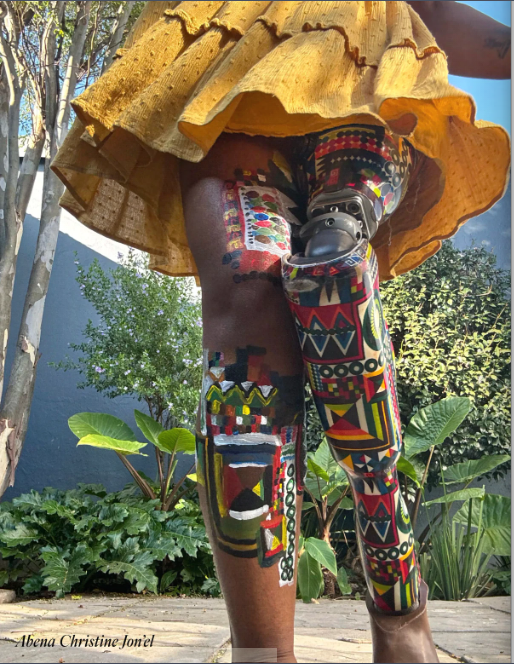
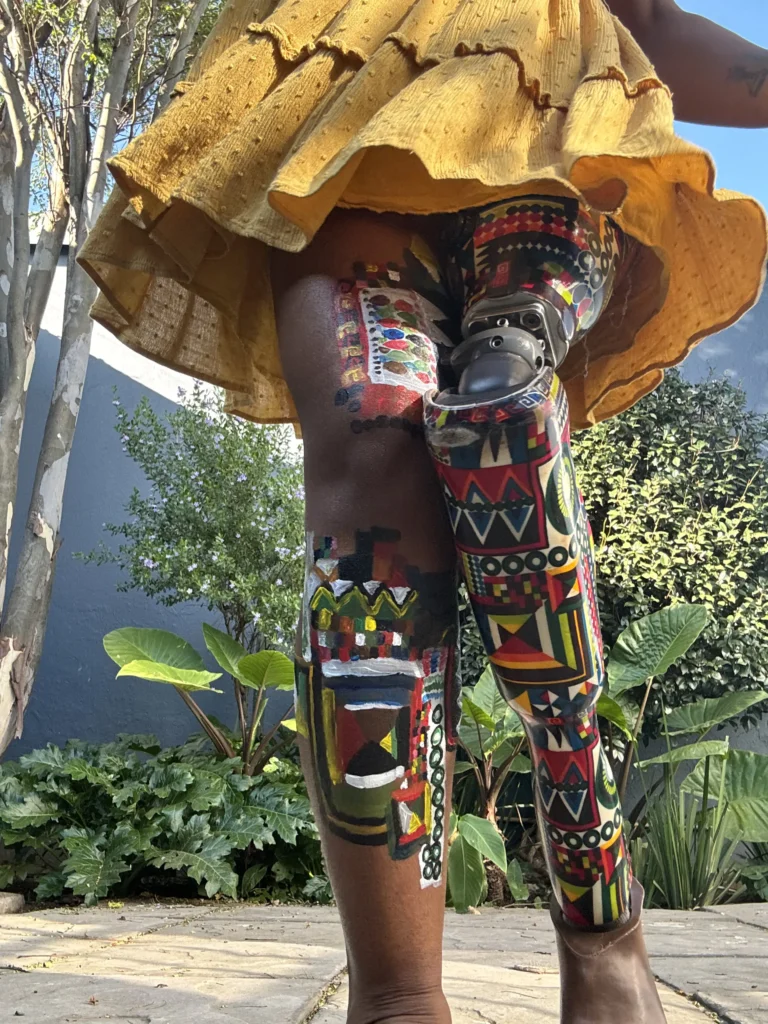
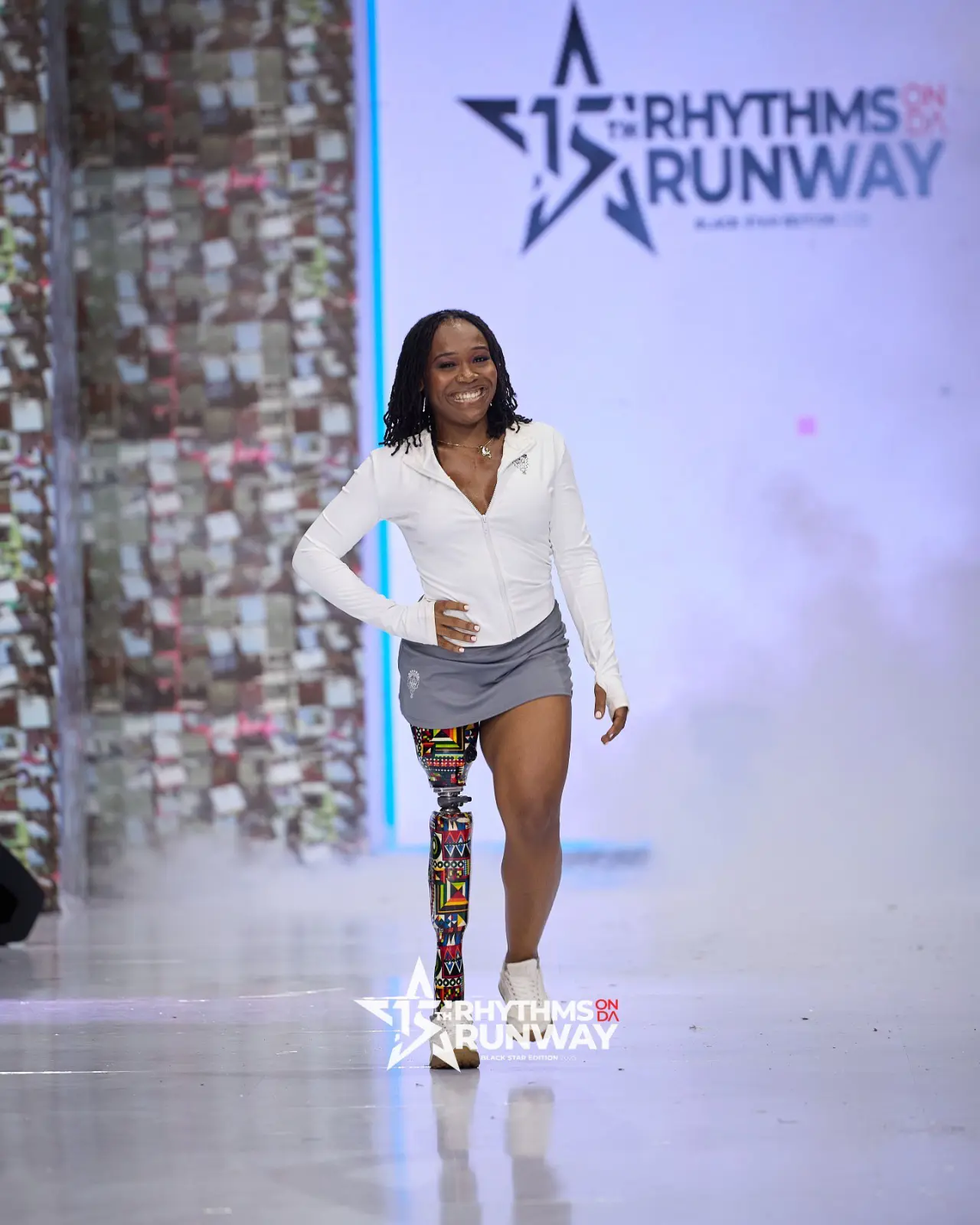
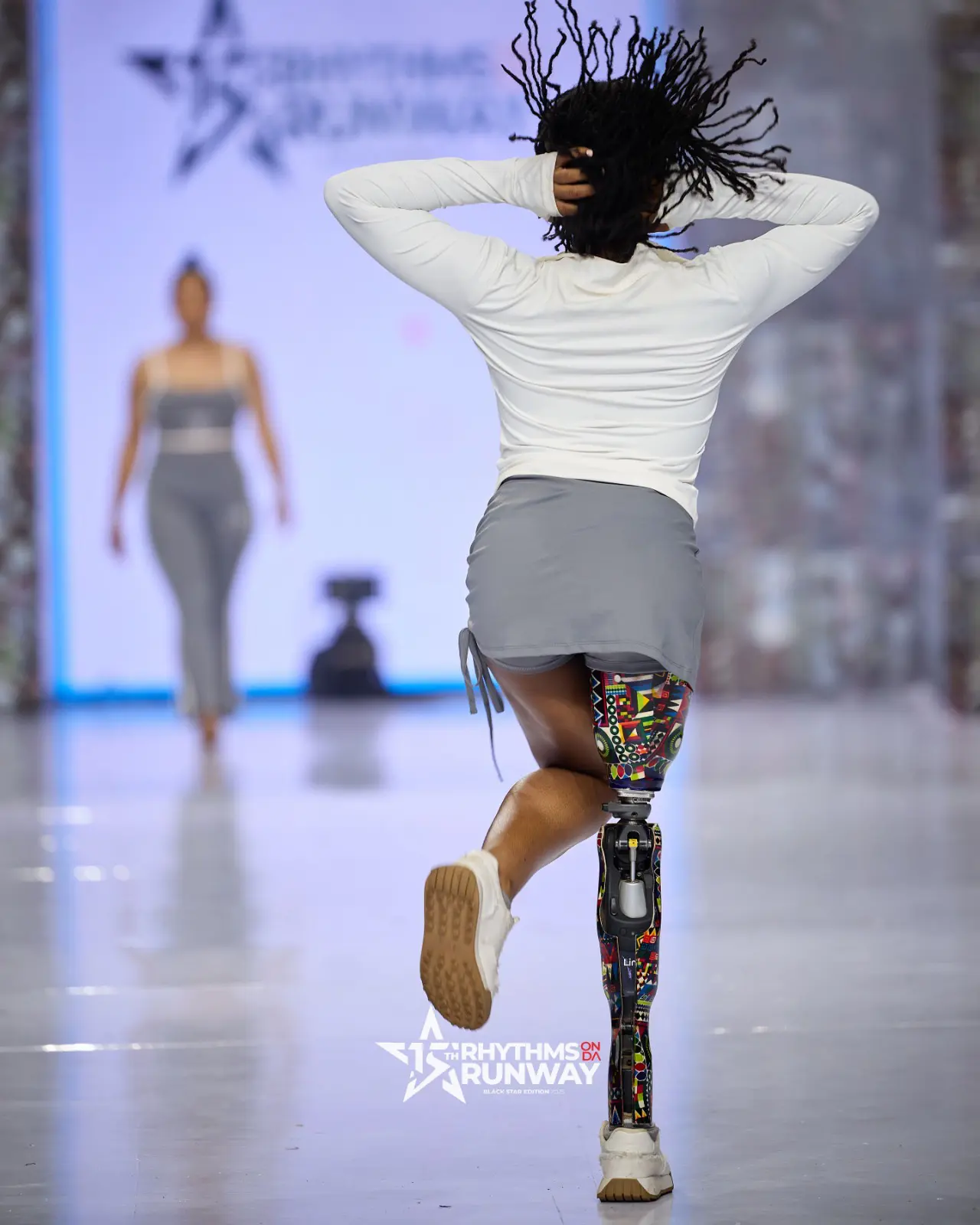
The result was her now-famous Kente-covered prosthetic leg, a fashion statement framed in culture, identity and the body she once tried to conceal. Wrapped in one of Ghana’s most recognizable textiles, Abena’s prosthetic becomes part of her outfits, silhouette and visual story before a word is spoken. Kente cloth is one of Ghana’s most celebrated cultural symbols and a fabric that survived centuries of colonial disruption. Abena chose it deliberately. Kente brings Ghanaian heritage, Black cultural pride and disability visibility into one striking form, turning the device she once concealed into the most deliberate element of the look. She describes it as a love letter to anyone who sees themselves reflected in her. Today, the Kente prosthetic has become her signature. Where she once saw a missing limb, she now sees art.
Fashion as expression
Fashion became the vehicle that helped her get here. It gave her disability a visual language, allowing her to express that part of herself on her own terms. She believes disabled people belong in high fashion, on runways and in editorial campaigns just as much as anyone else. Too often, Abena says, disabled bodies are limited to practical or athletic clothing. She wants to challenge that narrative and show that disability and glamour can exist in the same space, confidently.
Runway presence
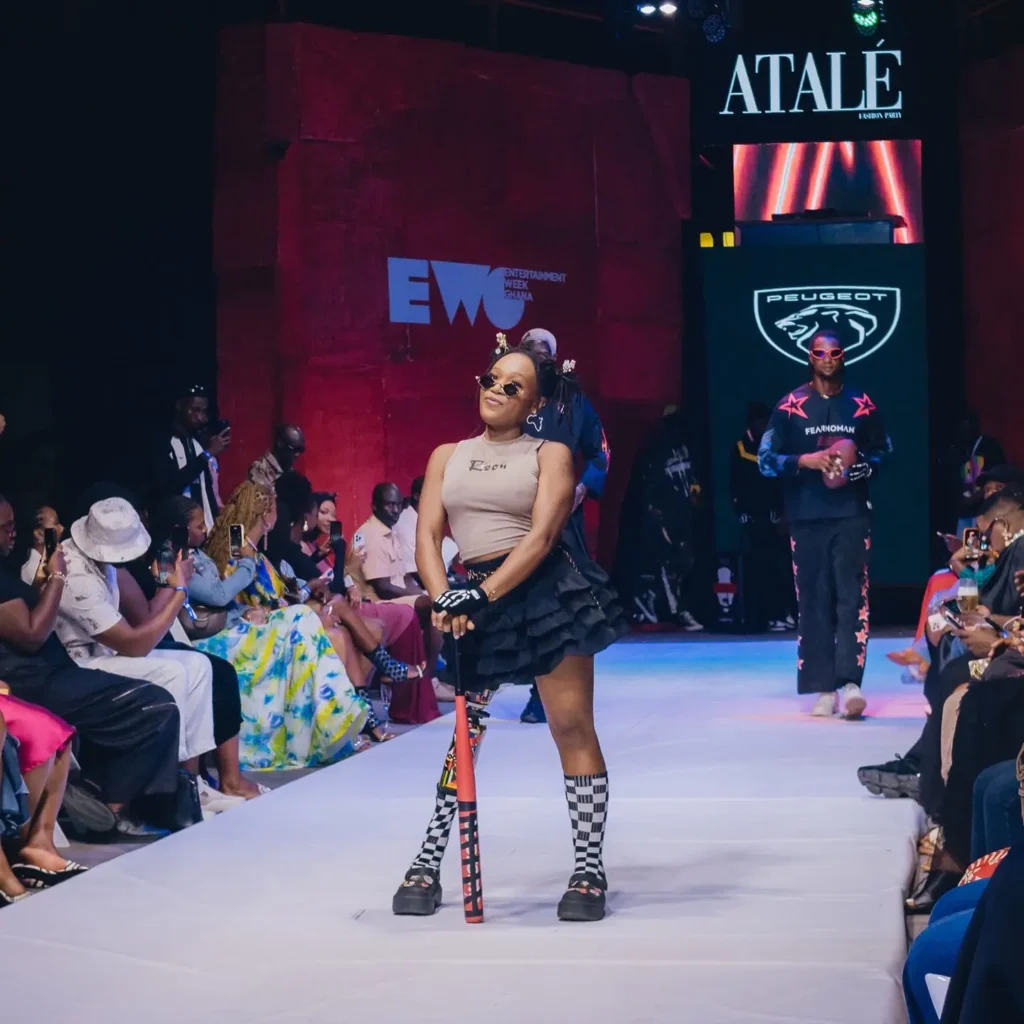
That confidence was on full display when Abena walked in Ghana’s Rhythms on the Runway fashion show. On the runway, she ensured that her prosthetic was not viewed as an interruption to the clothes. It became part of the look’s architecture, shaping how the outfit moved and how the audience understood the body wearing it.
The runway gave her prosthetic a different kind of stage. Under the lights, the Kente became motion, line, colour and rhythm. Each step brought the fabric into conversation with the outfit she wore, with the music, the audience and the space around her. The posture, pace, angle of the body and visibility of the prosthetic all worked together. Her presence asked the audience to look at disability through the language of style. Too often, disabled models are framed through function, adaptation or exception. Abena offered another visual reading. Her Kente prosthetic was visible, styled and inseparable from the overall presentation. It shaped the fashion moment. The room belonged to her, and so did the visual story she was carrying. Every stare from the audience became fuel, not fear. What might once have felt invasive became material she could use. She owned the runway and it showed!
There was power in that control. As a child, being stared at made her want to disappear. On the runway, that same attention moved differently. It met a woman who understood her body as part of the fashion image, not something outside it. Her moment on the runway held a mirror up to fashion, demonstrating that women with disabilities can be beautiful, editorial, glamorous and complete.
Ghana and belonging
Her journey of self-discovery and empowerment is closely tied to the place she now calls home. After relocating to Ghana, Abena found something she had been searching for her entire life. She found space to grow. She often says Ghana got to know her while she was getting to know herself. The country, its people and culture embraced her during a period of profound transformation. While disability inclusion in Ghana still faces challenges, Abena says the acceptance she experienced helped her become the woman she is today. Ghana gave her room to stop surviving and start living.
Her gratitude runs deep. She proudly identifies as Ghanaian-American and speaks passionately about the community that welcomed her. In many ways, Ghana became the backdrop for her reinvention.
Preparing to be seen
Beyoncé, the Grammy-winning singer, performer, entrepreneur and global fashion influence, also shapes Abena’s understanding of confidence, performance and self-presentation. Before runway appearances, speaking engagements and major events, Abena listens to Beyoncé’s Renaissance. The album has become part of her beauty and confidence ritual, helping her step into the version of herself that can be seen, styled and fully present.
That connection reaches beyond music. Beyoncé’s visual world is built on precision, glamour, control and self-possession, qualities Abena brings into her own relationship with fashion. When she dresses with her prosthetic visible, she is mentally choosing how her body will enter the room, how it will be read and how much of herself she will allow to be seen.
The emotional connection is just as personal. Reflecting on her difficult childhood, Abena shared a deeply moving observation: “Beyoncé’s love for her children healed the child in me.” For someone who grew up without the nurturing love she longed for, witnessing that affection offered a model of care, tenderness and emotional security. Beyoncé becomes part of the language Abena uses to understand softness, power, beauty and self-acceptance. That emotional connection also shapes how Abena imagines her place in fashion. Beyoncé’s world of performance, precision and visual power gives her a reference point for the kind of creative space she hopes to enter.
One of One
The parallels are not lost on Abena. Beyoncé often describes herself as one of one, a phrase Abena connects to her own place in fashion. Her Kente prosthetic is not only rare, but also personal, cultural and inseparable from how she presents herself. “I am the only one in the world to have it, one of one like Beyoncé,” she says. One day, she hopes their paths will cross. Until then, Abena continues to build her own visual language. The prosthetic she once concealed has become part of her signature. Wrapped in Kente, styled with intention and carried with confidence, it invites fashion to expand its imagination of beauty.