





Listen to this Article
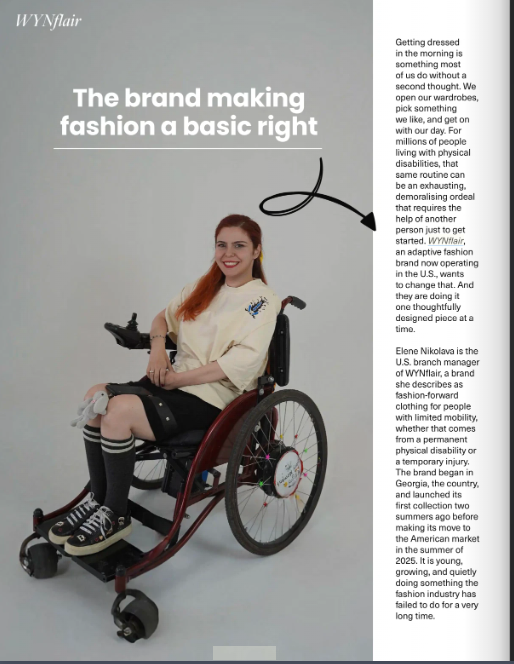
Getting dressed in the morning is something most of us do without a second thought. We open our wardrobes, pick something we like, and get on with our day. For millions of people living with physical disabilities, that same routine can be an exhausting, demoralising ordeal that requires the help of another person just to get started. WYNflair, an adaptive fashion brand now operating in the U.S., wants to change that. And they are doing it one thoughtfully designed piece at a time.
Elene Nikolava is the U.S. branch manager of WYNflair, a brand she describes as fashion-forward clothing for people with limited mobility, whether that comes from a permanent physical disability or a temporary injury. The brand began in Georgia, the country, and launched its first collection two summers ago before making its move to the American market in the summer of 2025. It is young, growing, and quietly doing something the fashion industry has failed to do for a very long time.
The idea started with a conversation. Elene and her co-founder were talking with a friend who is a wheelchair user, and the subject turned to the everyday obstacles she navigated because of her disability. Getting dressed came up. It was, she told them, one of the biggest challenges she faced. That stopped both founders in their tracks.
“It was surprising to us, because we never really thought about it,” Elene says. “When you consider physical disabilities, and then you look at this huge fashion industry that makes all kinds of different clothing with different fits for all kinds of different bodies, it was surprising that there are no options for them.”
What does exist in the adaptive clothing market today, Elene explains, tends to be expensive, limited in its features, and overwhelmingly medical in appearance. It skews toward older people, toward rehabilitation settings, toward nursing homes. For a 21-year-old who wants to express herself through what she wears, it is close to useless. WYNflair was built to fill that gap, creating clothing with adaptive features that are hidden in plain sight. You would not know, looking at a WYNflair piece, that it had been designed around a seated body, or that its openings use magnetic and Velcro fastenings rather than fiddly buttons. That invisibility is the entire point.
The design process started with listening. Elene and her team spoke directly with wheelchair users and people with other mobility challenges, setting up calls and in-person meetings to understand what made dressing difficult. What they found was that the challenges, while different across different disabilities, followed common patterns. Collars too tight to pull over the head. Shirts that required arms to be lifted. Pants that were cut for people who stand, making them deeply uncomfortable for someone who spends their day seated.
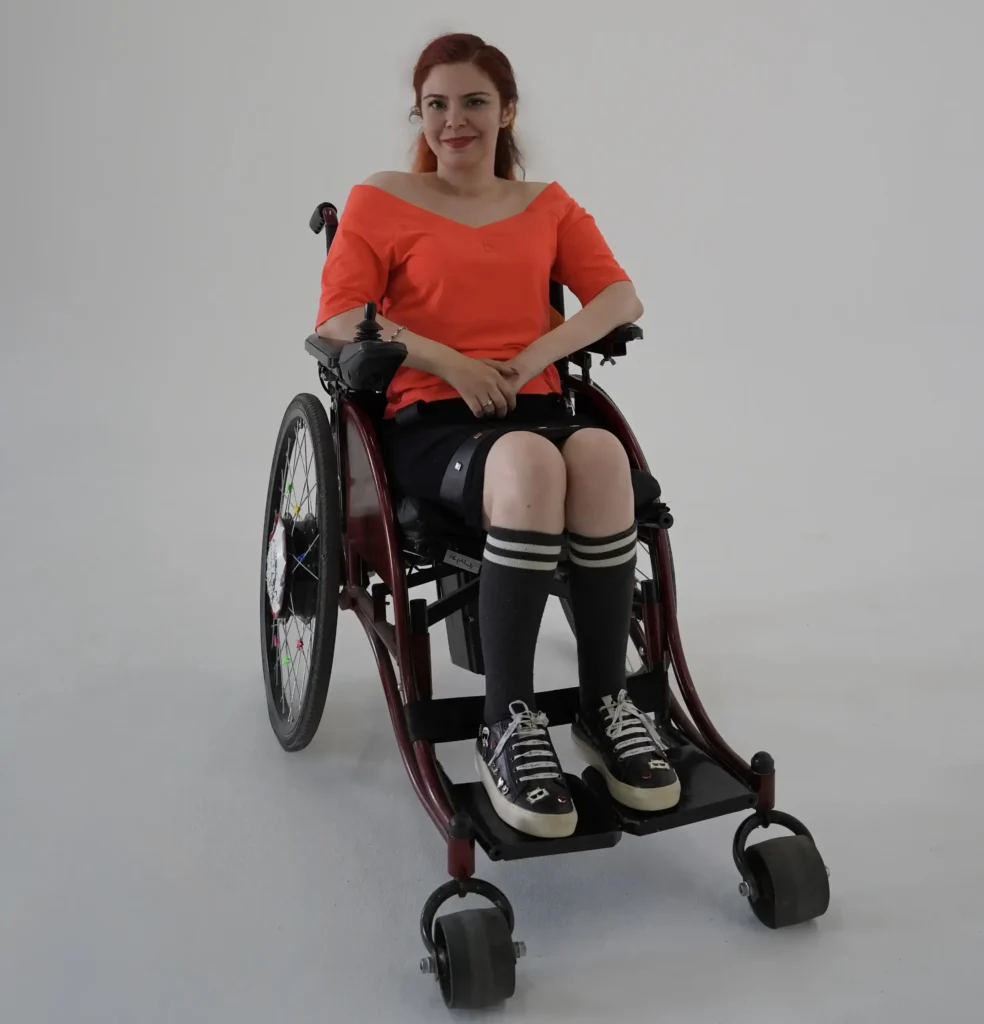
For WYNflair‘s pants, the fix was to redesign the fit entirely around the seated body, so that putting them on becomes manageable, and wearing them throughout the day stays comfortable without constant readjustment. Pockets were moved from the hips to the legs, where a wheelchair user can actually reach them. Simple changes, enormous difference.
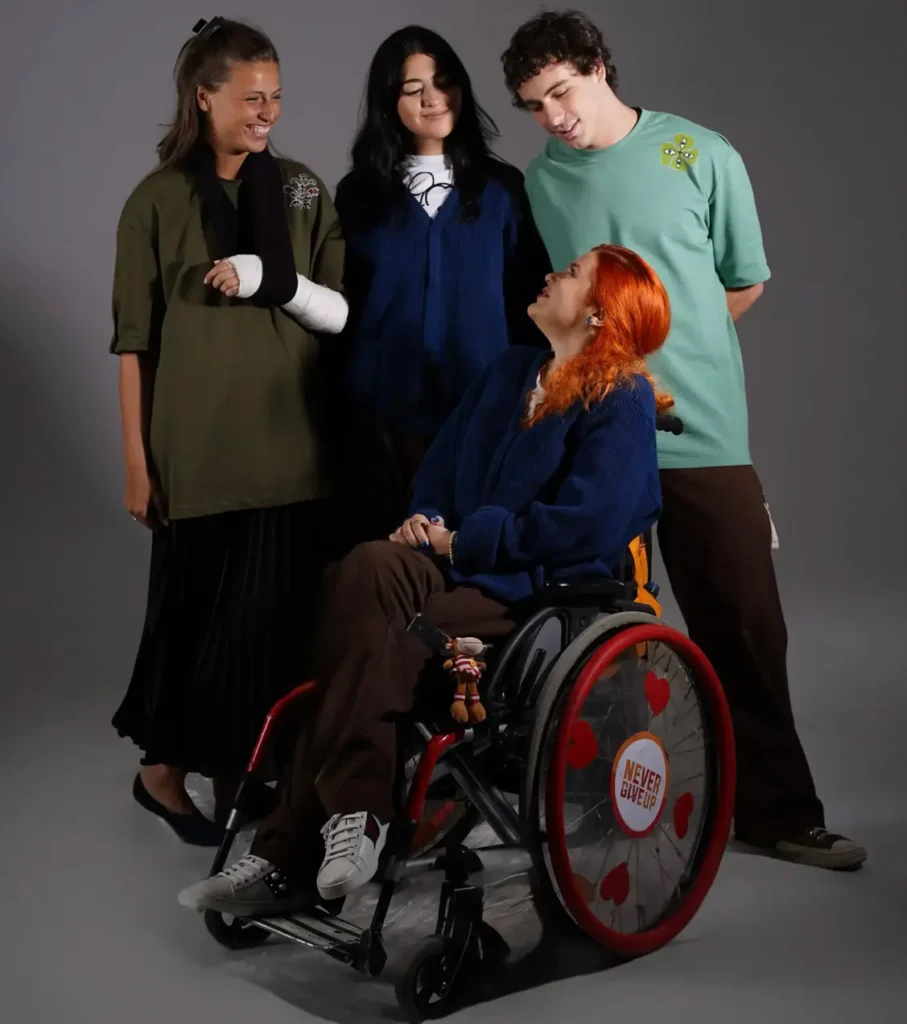
The brand also designs for people with limited hand and finger mobility, and for those dealing with temporary injuries like a broken leg that makes pulling on regular trousers close to impossible. The goal is to identify the barriers that cut across the widest range of conditions and build solutions into clothing that looks like clothing, not medical equipment.
The moment that made all of this feel real came shortly after the first collection launched. WYNflair gave a set of their pants and a t-shirt to a young woman, a wheelchair user in her early twenties, who later participated in one of the brand’s photoshoots. She told Elene that wearing the clothes, for the first time in her adult life, she had been able to get dressed without help from her parents.
“She told us that she always felt like a burden,” Elene recalls. “She said it kind of changed her life, and changed how she goes about her day, because starting her day with a struggle put her down and made her want to go out a lot less.”
That story sits at the heart of what WYNflair is trying to do. The clothing is designed to make dressing easier, but it also addresses identity and independence. It is about a 21-year-old being able to get up in the morning and feel like herself, without needing to ask for help with something most people never think twice about.
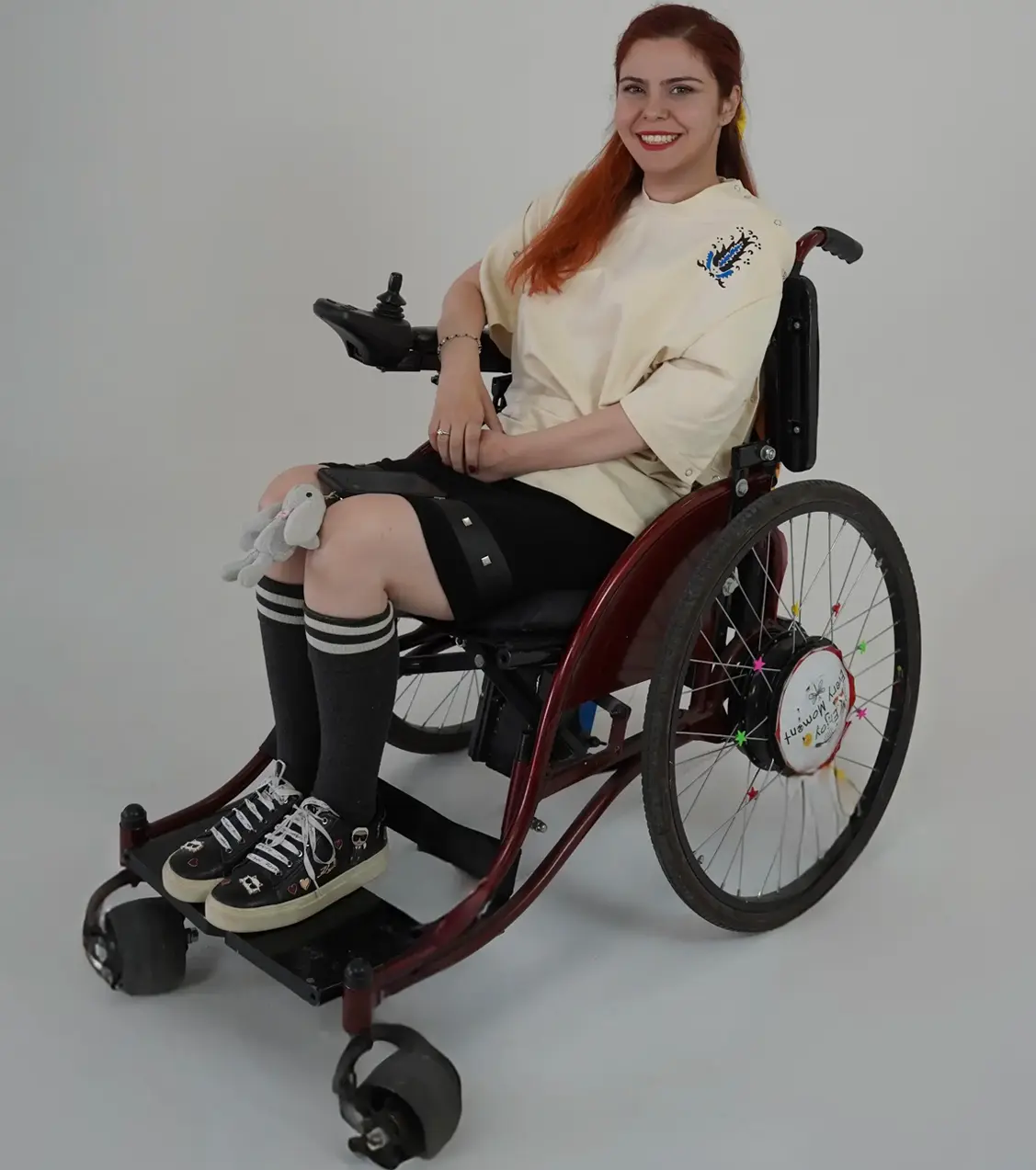
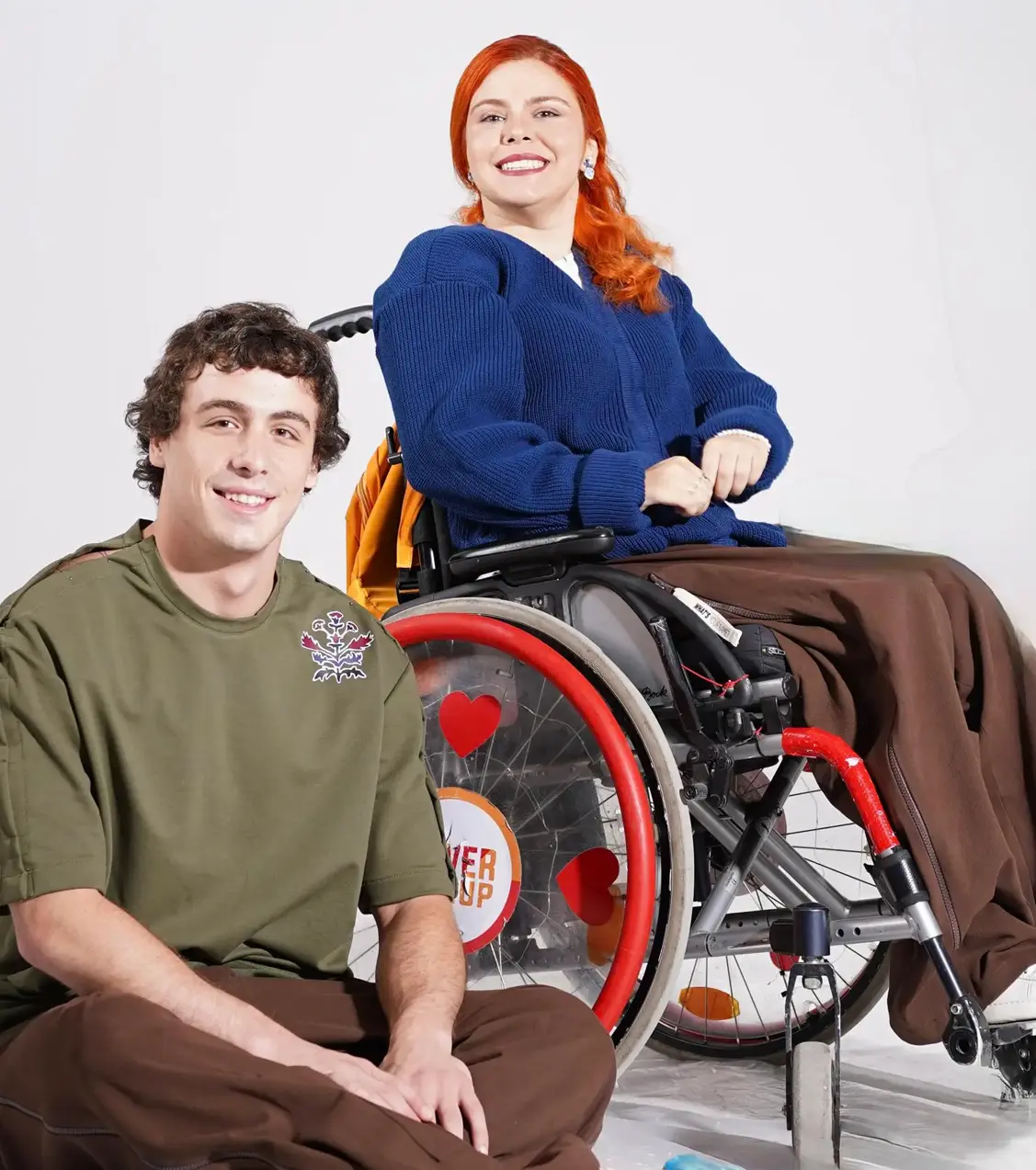
Now, WYNflair is working with Paris-based fashion designers to develop their second collection, one that will push harder into genuine style territory. They are also in early conversations with other clothing brands about potential collaborations, hoping to nudge the wider industry toward taking this community seriously.
The ambition is not to be the only brand serving people with limited mobility. It is to be the one that proved it was possible, and made others follow.
“We want to be the ones who start this initiative,” Elene says. “We want other brands to take an example from us.”
The industry has had years to address these gaps, but WYNflair is now taking matters into its own hands.