


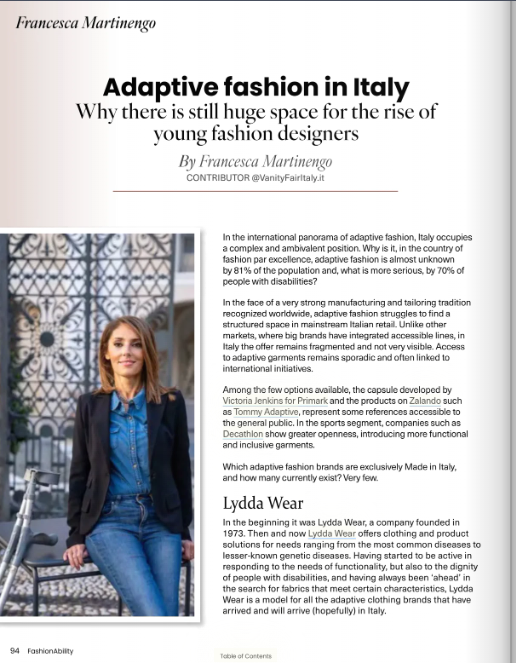
By Francesca Martinengo
Listen to this Article
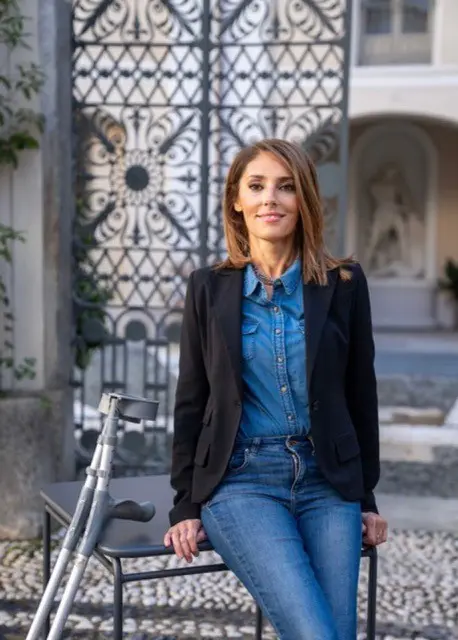
Francesca Martinengo,
Contributor, @VanityFairItaly.it
In the international panorama of adaptive fashion, Italy occupies a complex and ambivalent position. Why is it, in the country of fashion par excellence, adaptive fashion is almost unknown by 81% of the population and, what is more serious, by 70% of people with disabilities?
In the face of a very strong manufacturing and tailoring tradition recognized worldwide, adaptive fashion struggles to find a structured space in mainstream Italian retail. Unlike other markets, where big brands have integrated accessible lines, in Italy the offer remains fragmented and not very visible. Access to adaptive garments remains sporadic and often linked to international initiatives.
Among the few options available, the capsule developed by Victoria Jenkins for Primark and the products on Zalando such as Tommy Adaptive, represent some references accessible to the general public. In the sports segment, companies such as Decathlon show greater openness, introducing more functional and inclusive garments.
Which adaptive fashion brands are exclusively Made in Italy, and how many currently exist? Very few.
Lydda Wear
In the beginning it was Lydda Wear, a company founded in 1973. Then and now Lydda Wear offers clothing and product solutions for needs ranging from the most common diseases to lesser-known genetic diseases. Having started to be active in responding to the needs of functionality, but also to the dignity of people with disabilities, and having always been ‘ahead’ in the search for fabrics that meet certain characteristics, Lydda Wear is a model for all the adaptive clothing brands that have arrived and will arrive (hopefully) in Italy.
Iulia Barton brand
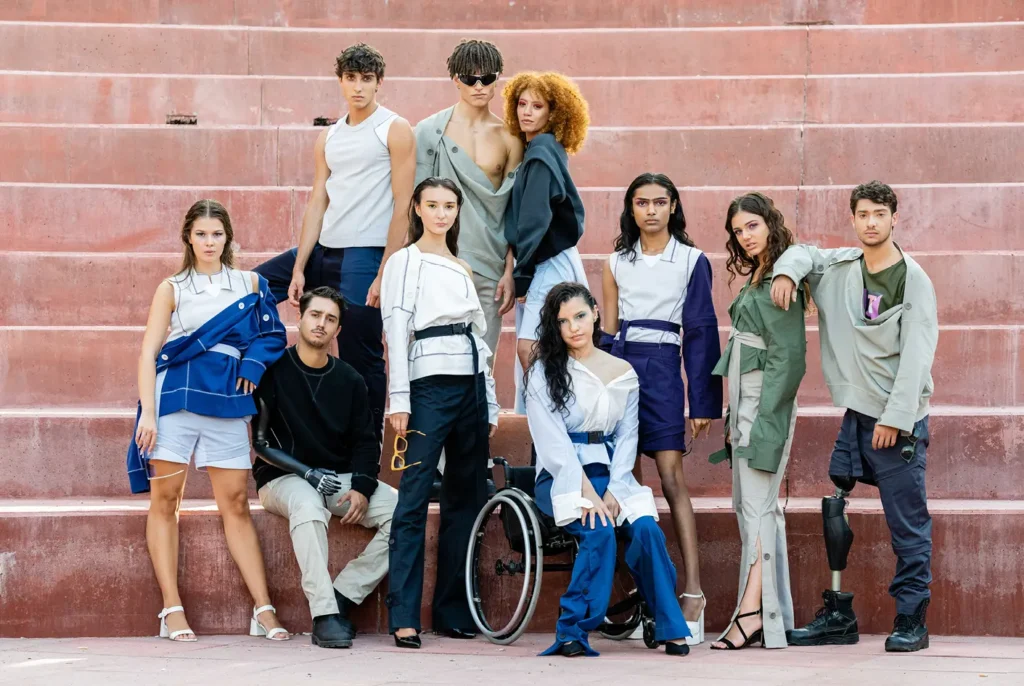
“When a person with a disability walk past a shop window, they think that dress is not for them. And she is not wrong.” With this awareness, the Iulia Barton brand, founded by Giulia Bartoccioni, was presented in September 2022 during Milan Fashion Week, one of the first (if not the first) Italian experiences of an inclusive and sustainable fashion brand, designed from the beginning for people with disabilities.
The project ‘has its roots’ in a personal story: in fact, Giulia Bartoccioni was introduced to disability after her brother lost the use of his legs in an accident. Initially, in 2016, the idea took shape as an inclusive fashion agency, with the aim of bringing models with disabilities to the catwalk together with professionals in the sector. That experience had represented a valuable laboratory, allowing them to observe the limits of the industry up close. Many garments were adapted but rarely designed from the beginning for different bodies. Hence, in 2020, came the transformation into a brand with a clear goal: to combine sartorial quality, aesthetic research and real inclusion, offering garments capable of enhancing every physicality. “We wanted to offer a product that was comfortable, but also beautiful to wear and look at,” explains Giulia Bartoccioni, adding that in order to design truly inclusive clothes, the creative team had listened to people with different disabilities, with the awareness that “each body has specific needs.
The debut took place with the capsule presented in 2022, developed together with designer Diego Salerno: modular and combinable garments, with technical solutions designed to facilitate wearability without sacrificing aesthetics. Details such as side openings, adjustable systems and internal devices responded to concrete needs, while maintaining a strong stylistic identity. Alongside inclusion, sustainability was also a pillar of the project: materials designed according to circular economy logic. It got great feedback and even internationally it was significant, with particular interest from the younger groups and from the Asian and Japanese markets. At the end of 2024, Giulia Bartoccioni deliberately ended production of the brand when she decided to devote herself full-time to her brother’s Vertical Foundation. The Iulia Barton brand, however, remains a point of reference for those who today in Italy want to develop an adaptive and inclusive fashion project. It is a model that has helped to redefine the languages, processes and possibilities of the sector.
I Vestiti di Gio
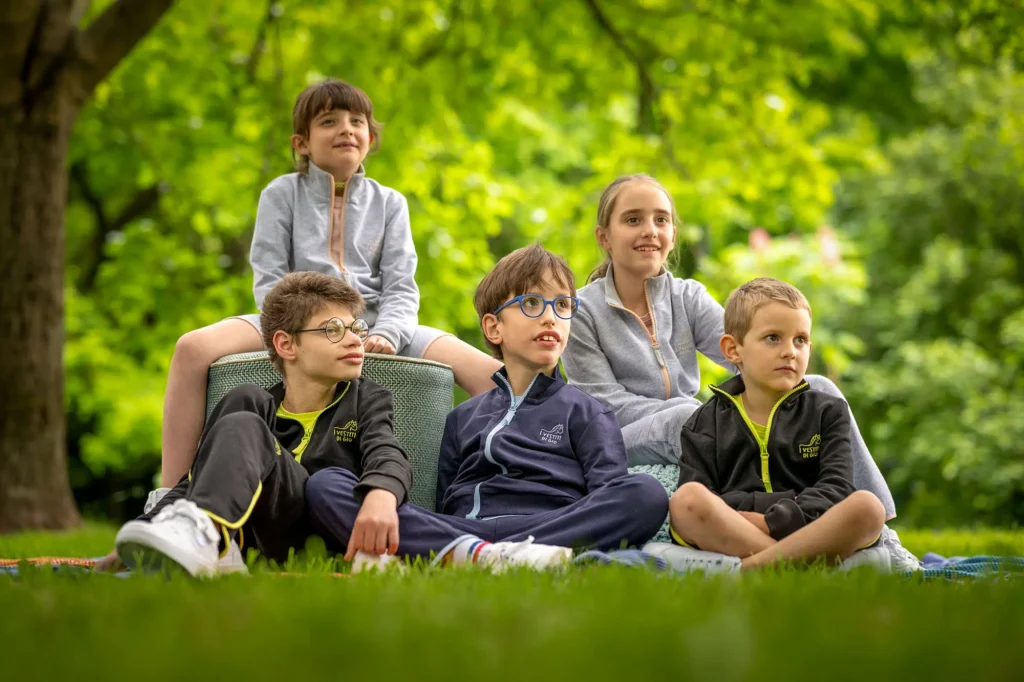
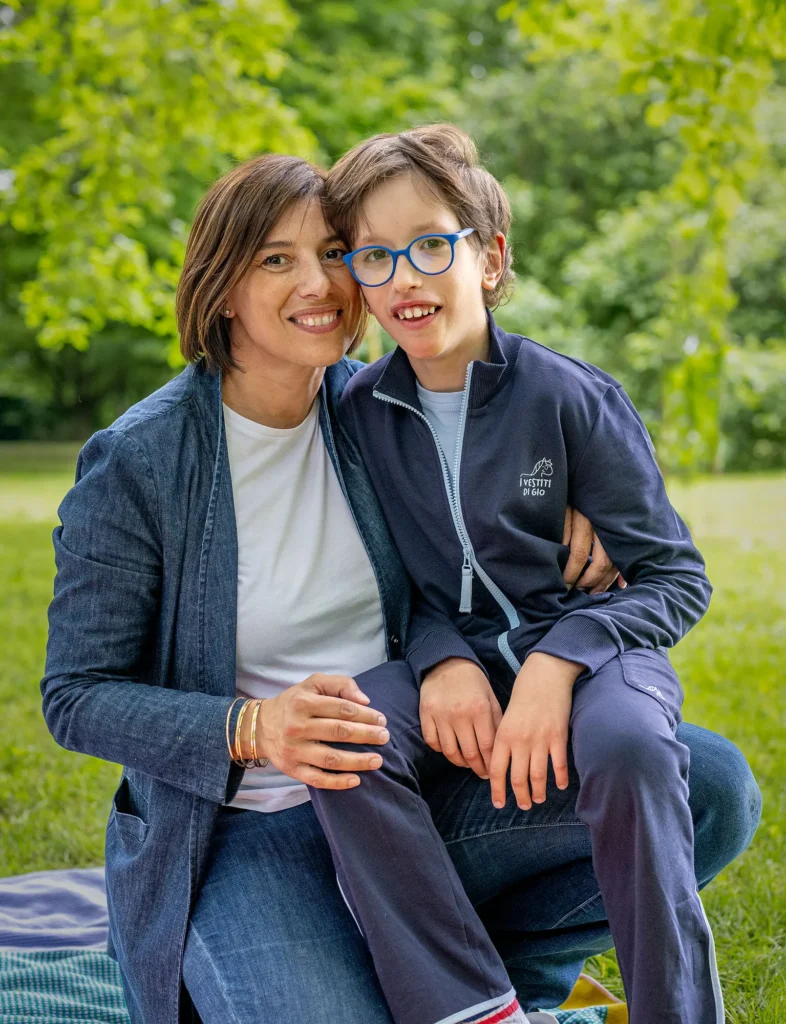
Since July 2024, the online shop of another Made in Italy brand, I Vestiti di Gio (Gio’s Clothes), has been active: adaptive garments for children and teenagers. The idea came from a mother, Elisa Zigno, who said: “My son Giovanni has Sotos syndrome, a rare degenerative genetic disease. The idea came from observing the difficulties he had while dressing himself, precisely because of his motor and coordination limitations. I understood that this need for ease and autonomy in wearing clothes could also be a common need for many other children and young people and their parents.”
Thus, in March 2024, the company was born, and a few months later the website was online. In addition, I vestiti di Gio is also present in a physical store in Padua, a city of North Eastern Italy near Venezia @emmedimamma. Their collection consists of colorful and very soft garments, all of which can be combined with each other: the zips are magnetic closure instead of interlocking; the trousers are open at the bottom so you can take them off and put them on without taking off your shoes—there is no drawstring at the waist, and side pockets are positioned to be easily accessible; the t-shirts can be worn on both sides so as to always be ‘right’ however the child wears them. As Elisa says: “Gio’s Clothes want to help children and parents to find colorful, cheerful and facilitating solutions that are accessible.
Selva
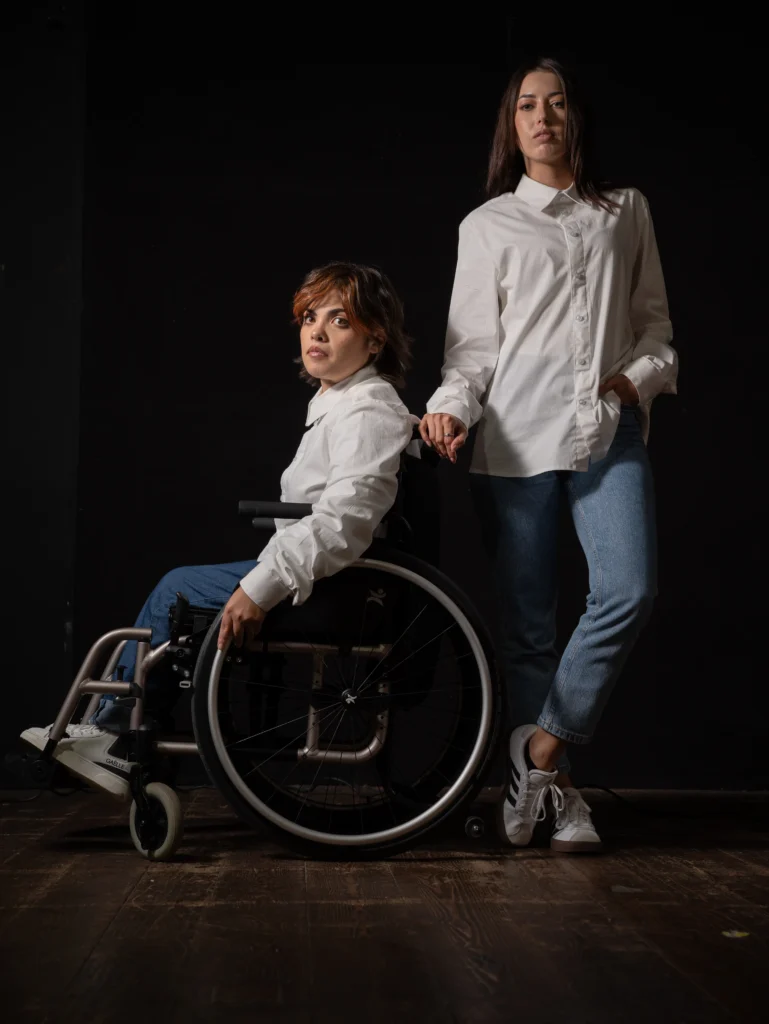
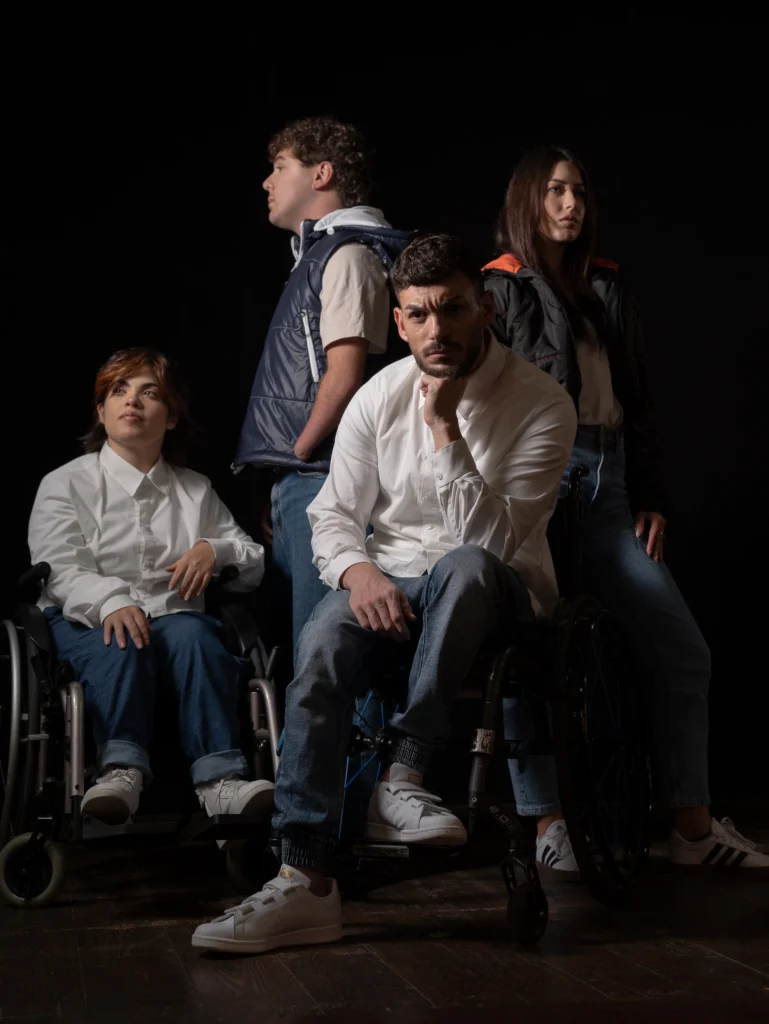
“The absence of adaptive clothing in the Italian market was the main reason that motivated my choice,” says Silvia Barbieri, fashion adaptive designer from the province of Avellino near Napoli, founder and CEO of the brand Selva. After graduating in 2021 “with an experimental thesis on adaptive modeling for a non-ambulatory male body,” she started a project for which “I create garments that I try to make as suitable as possible for the various forms of disability, listening to the needs and suggestions of a group of girls and boys from the disabled community.”
Silvia explained, “What we are focusing on now is the production of garments that everyone can wear, people with and without disabilities. I believe that this is true inclusion.” She adds, “For me, adaptive fashion is a large space to be almost totally explored and there is a big gap in the Italian market. Designing adaptive clothing means designing smart clothing to make dressing and undressing easier and independent. At the moment I am working on new prototypes. One of these is the shirt desired by the majority of boys and girls I have had the opportunity to interview and who are part of my disabled girls and boys’ community. I noticed that the simplest items of clothing are the most requested, the ones you say you can’t not have in your closet.”
Silvia shared, “a collaboration with a well-known sportswear brand will soon come to life. I will create capsule collections and limited-edition adaptive essentials designed to become must-haves in everyone’s wardrobe.”
Materia
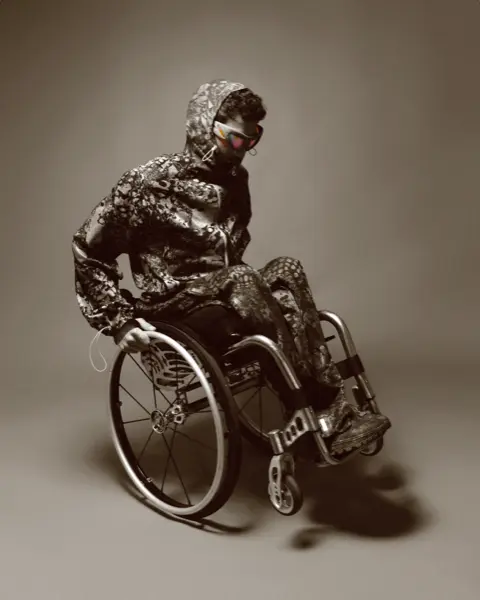
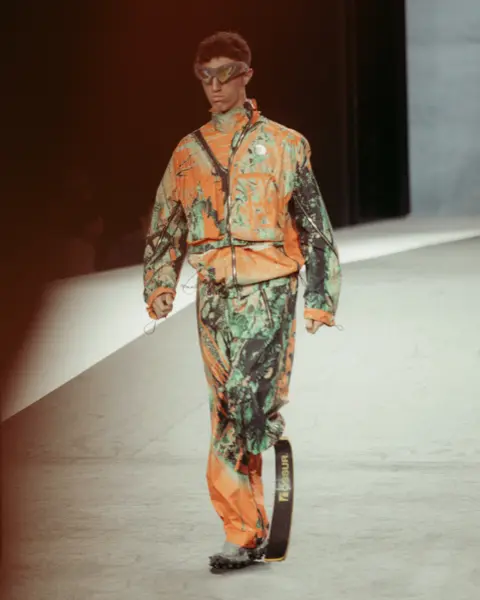
The Materia brand was started in 2023 from the project of the young creative Francesco Saverio Materia, who graduated from the European Institute of Design (IED). Materia is a functional and inclusive fashion brand that brings together avant-garde aesthetics and accessible design. It was born from the desire to create garments that are personal expressions, tools of autonomy, and vehicles for change. Each collection is designed to adapt to the body and the life of the person wearing it, breaking down physical and social barriers.
Driven by technological innovation and sustainability, Materia shapes a new language of fashion: more ethical, more human, more free, where design comes from function, every shape has a purpose and every detail responds to a need. Functionality transformed into style.
In the choice of fabrics production of garments, Materia uses a regenerative and circular approach, to significantly reduce the environmental impact while maintaining an avant-garde aesthetic and continuous innovation in materials. Materia also signed the uniforms of the athletes and dancers for the opening ceremony of the Milan Cortina 2026 Paralympics.
Francesco Saverio Matera was recently awarded the Camera Moda Fashion Trust Award as one of the best independent designers in Italy. With his brand MATERIA, he has developed a research approach that combines adaptive fashion, innovation, and functional design.
This step has crossed a previously seemingly insurmountable barrier: Italian fashion is finally beginning to embrace a “new” fashion that embraces all body types and physicalities.
Wheelglam
Alongside more structured and technical brands such as Materia, there is also a generation of designers who are bringing a more aesthetic, identity and highly personal dimension to the sector. Among these figures Francesca Cella, founder of Wheelglam stands out. Her course of study is articulated and transversal: a first diploma from the professional high school with a focus on textile and tailoring productions, followed by a three-year degree in Fashion and Costume Sciences at the Sapienza University of Rome, within the faculty of Literature and Philosophy, and finally two years of training at the IED.
Wheelglam came to life as a structured project between 2022 and 2024, with a communication campaign on social media. Francesca explains: “I started publishing seriously in 2024. I didn’t want to leave without completing my study and research.”
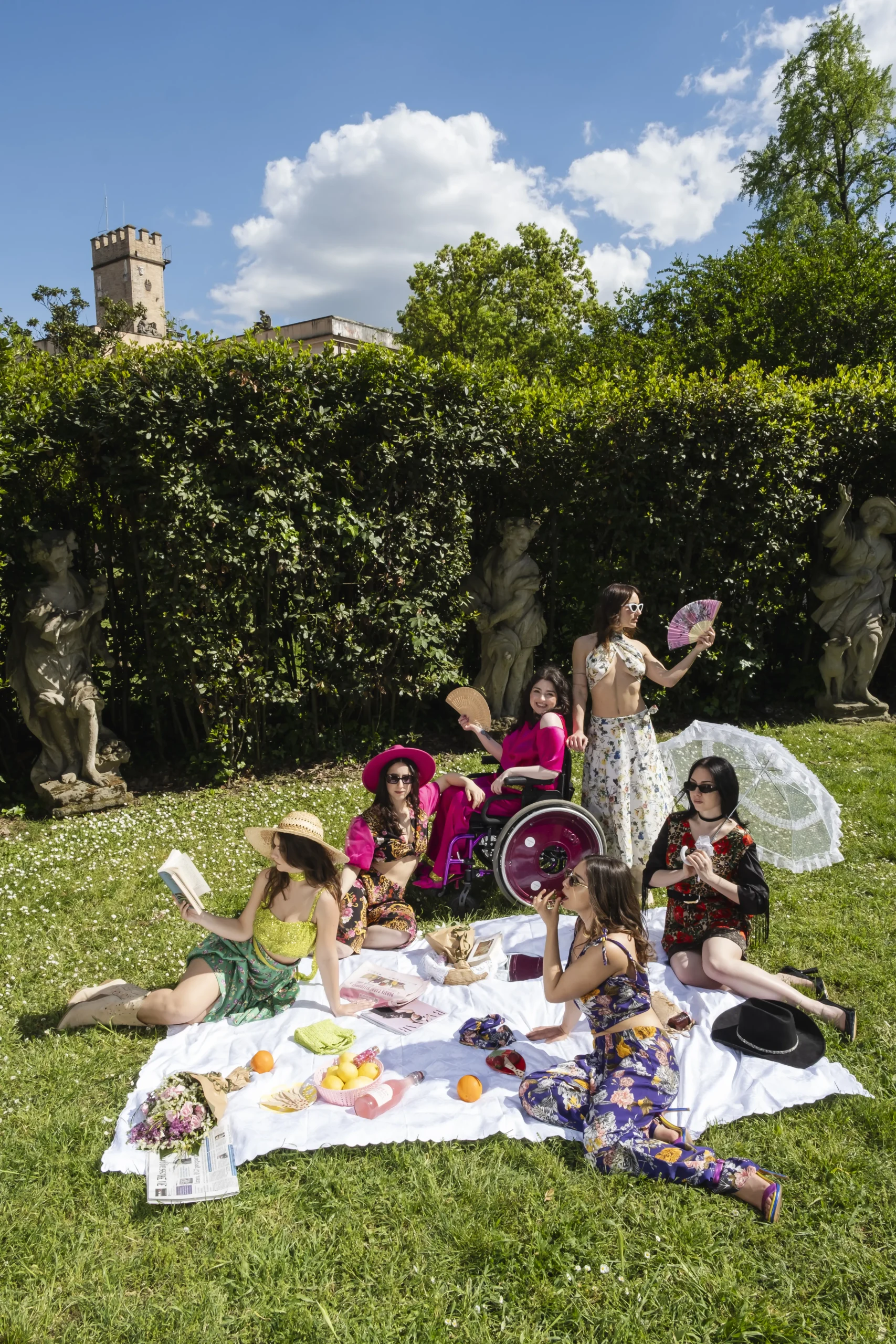
Wheelglam‘s style is located in a precise area of the adaptive landscape: a highly glamorous, colorful and decorative aesthetic, which rejects the clinical or hospital narrative often associated with disability. It is an approach that aims to normalize aesthetic desire, bringing the body back to the center of fashion not as a limit, but as an expression. “I don’t want disability to be told in a clinical or sad way. We people with disabilities are not gray and apathetic, we are not without desires”, says Francesca. “I have always been attracted by colors, sequins, glamorous elements, but also by a more natural and masculine style. Everything coexists.”
The brand offers an imagery that alternates scenic and everyday elements with a strong focus on the versatility of the garments. The result is a style that can move from a more scenographic and brilliant aesthetic to more essential and functional solutions, without ever losing its identity.
Wheelglam creates two main collections per year, one for the spring-summer season and one for autumn-winter, with an increasingly inclusive opening towards both menswear and womenswear. The brand does not have a traditional structured e-commerce and its main showcase is Instagram, where Wheelglam builds its visual identity, tells the story of the collections and dialogues directly with its community, sharing the story of the collections.
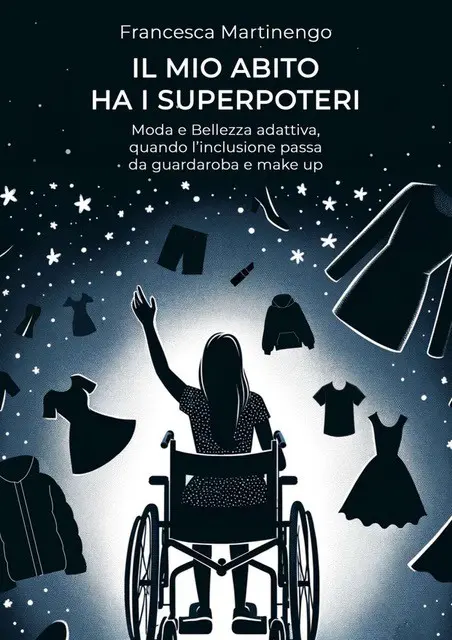
(My Dress has Superpowers – Adaptive Fashion and Beauty: When Inclusion Starts with Wardrobe and Makeup)
Author: Francesca Martinengo