








Listen to this Article
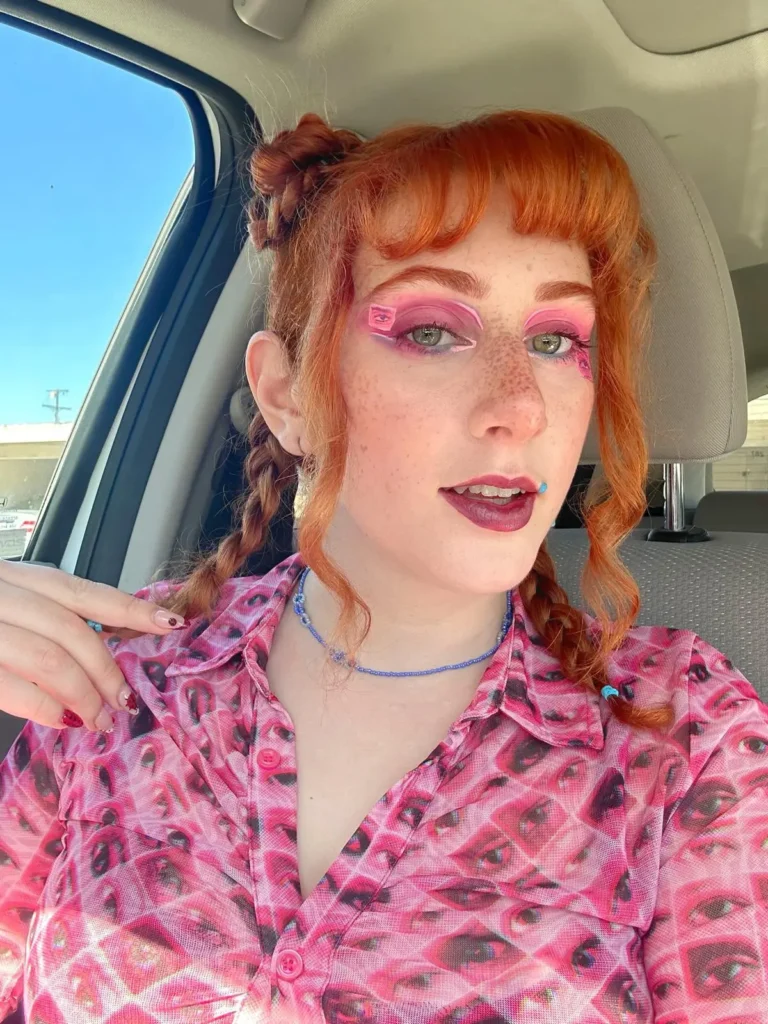
From the moment Fay starts talking about fashion, one thing becomes obvious. This isn’t a style she discovered. It’s one she’s always had. Matching outfits have long been essential. Accessories are never optional. Bright colours, carefully chosen textures and clothes that feel right are part of who she is. Long before she became an actor, comedian, artist and one of the internet’s most beloved multi-hyphenate creators, Fay had already figured out what made her feel most like herself. And spoiler: it has never, not once, involved leggings.
“If you see me in leggings, something is wrong with me,” she says, laughing.
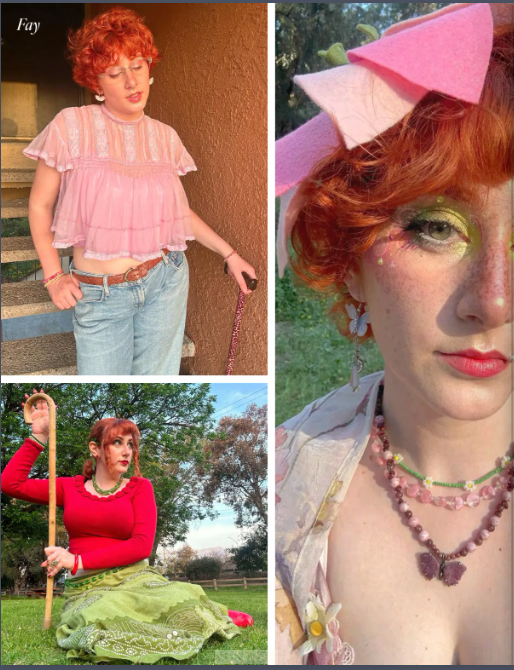
These days, Fay’s signature look is just as intentional and just as joyful. Think pink tennis skirts, a pink cane, a full face of blush (three shades, minimum . . . her words), and glittery merch she designed herself that reads Babe with a Mobility Aid. She recently discovered bangle heaven at an estate sale, “bangle city,” she calls it, and has been gleefully jingling ever since. She is, in every sense, a woman who dresses like herself. And she’s here to tell you that you should too.
Your cane is an accessory. Act accordingly.
Let’s talk about the elephant in the room, or rather, the gorgeous, untapped style potential of mobility aids that the fashion world has been criminally ignoring.
“A cane used to be a symbol of power and a fashion accessory,” Fay says. “You’ve got a whole other accessory to work with.” She’s watched family members feel shame about using walkers and canes, and she’s firmly, cheerfully over it. Medical supply stores hand out functional-looking equipment with zero personality. But that’s a starting point, not a sentence. DIY it. Gemstone it. Coordinate it with your tennis skirt!
Her own Babe with a Mobility Aid design came out of a collaboration with her friend Sam, who goes by Disabled Icon on Instagram and runs her own brand, Disabled Icon. The result? Merch that doubles as a manifesto and a look. Paired with the pink cane and the pink skirt, it’s the outfit Fay reaches for when she wants to feel powerful. Based on her schedule: stand-up one night, film set the next morning, auditions in the afternoon, that is basically always.
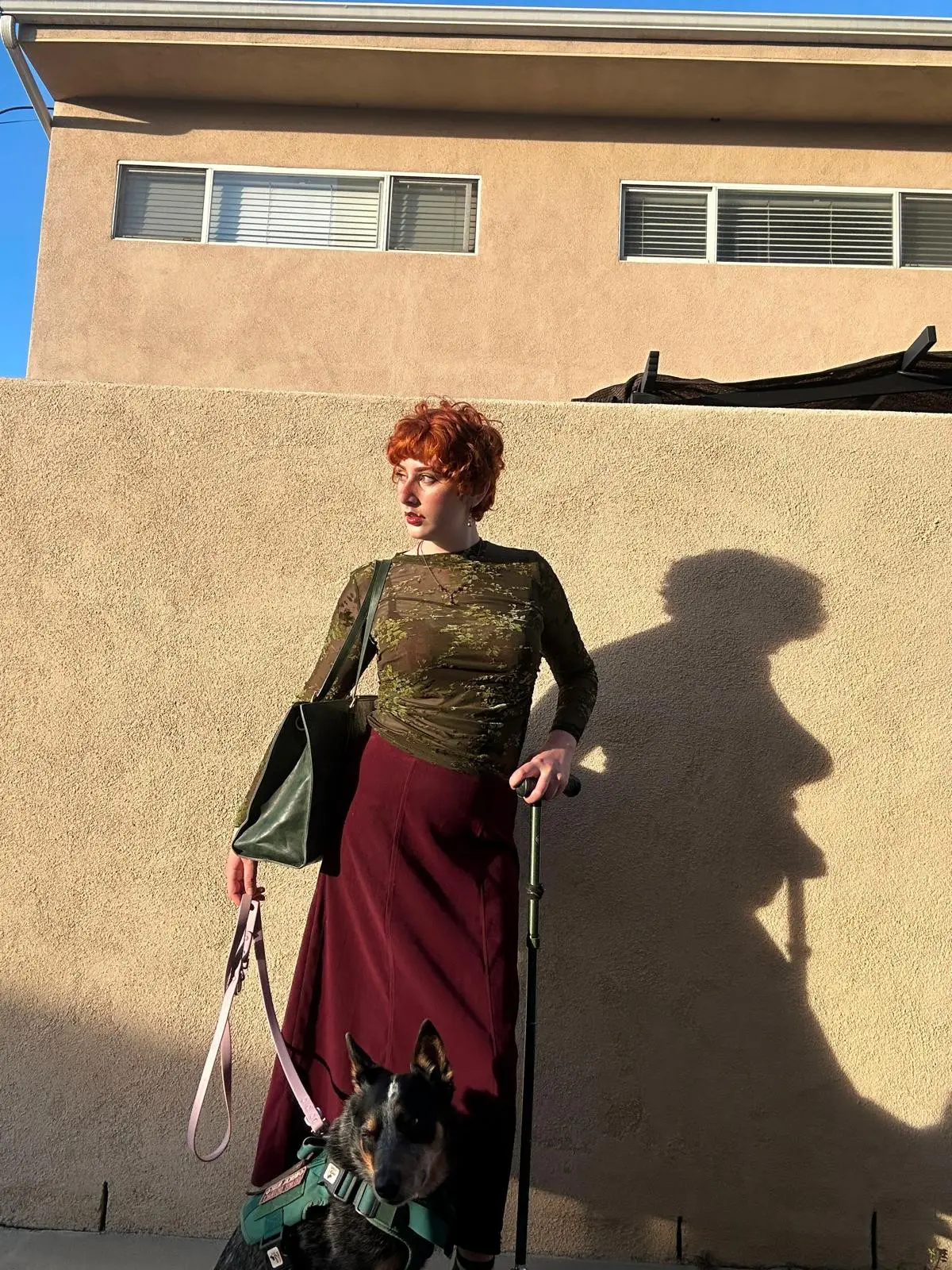
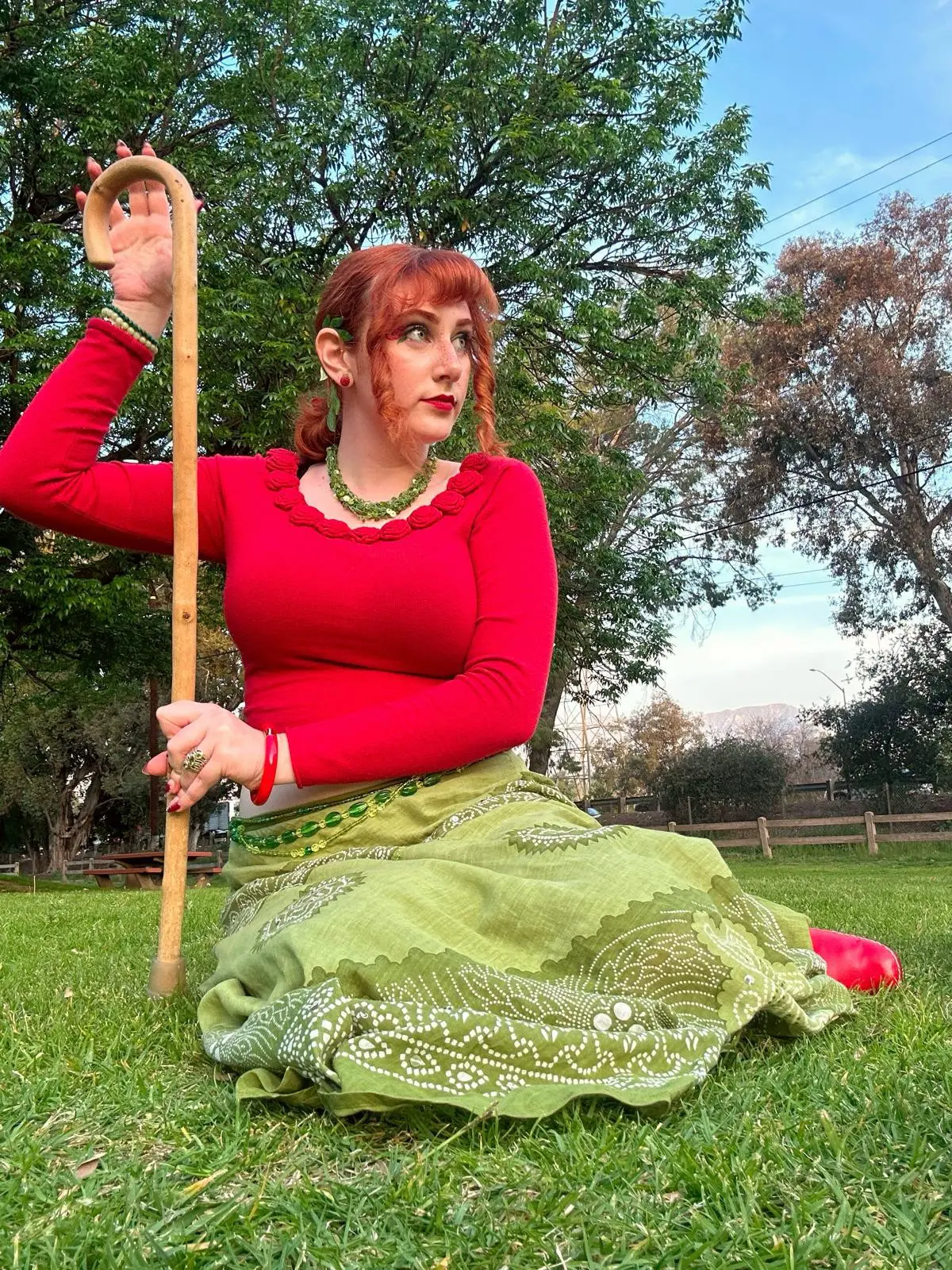

The philosophy behind the look.
Here’s the thing about Fay’s style: it’s not a performance. “I like to express my insides on my outsides,” she says. She wears a full face of makeup to events knowing she’ll scrub it all off the second she gets home. This is not because she’s performing for anyone, but because walking out the door as her fullest self is simply what feels right.
Being disabled, she argues, doesn’t diminish that impulse. It amplifies it. “Sense of fashion is not unique to the able-bodied experience,” she says. “There’s absolutely no reason a disabled person can’t have one.” Disabled people, she points out, are creative problem-solvers by necessity. They’re also, it turns out, excellent dressers. That mindset extends well beyond what she wears. Her style is not another role she steps into. It is one of the clearest ways she shows who she already is. Colour, accessories, makeup and texture are not extras but are part of the language she uses to feel visible, confident and fully herself.


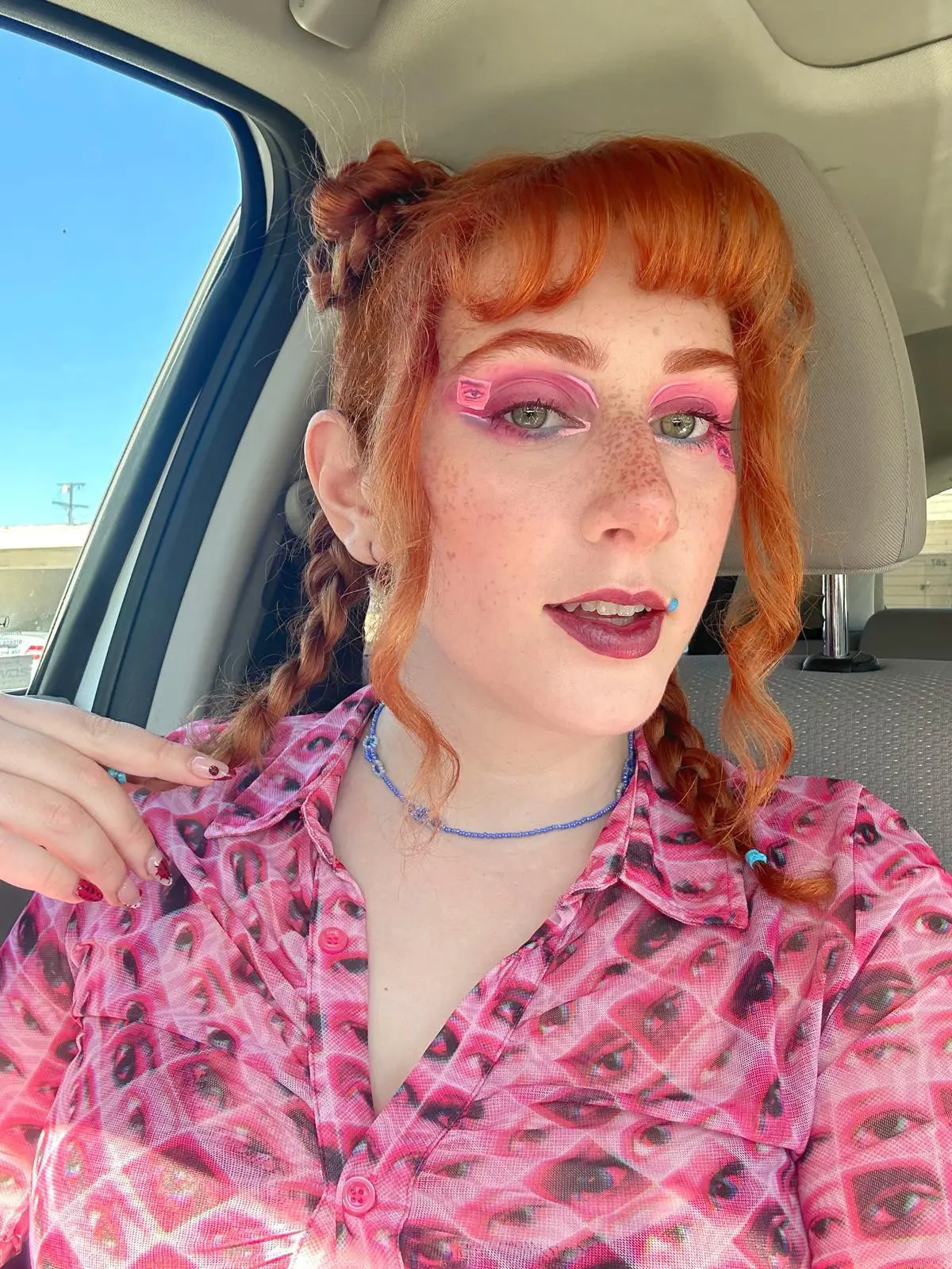
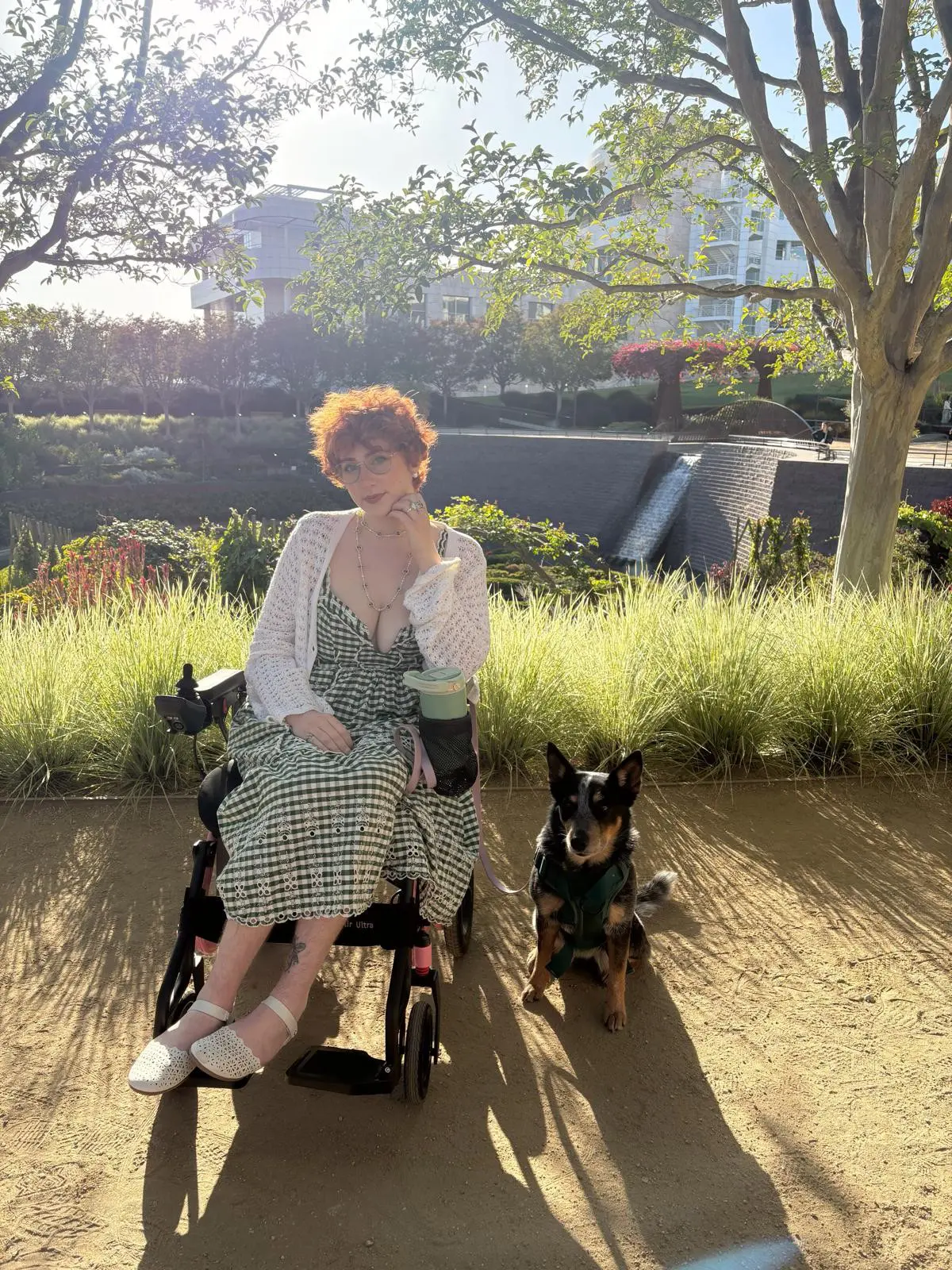
The style hacks you didn’t know you needed.
Fay’s approach to accessible beauty is the antithesis of “less.” It’s about doing more of what works, and ditching what doesn’t, efficiently, intelligently, and without sacrificing a single sequin.
The rolling chair trick. Fay does her hair, makeup, and skincare seated, using a rolling chair she wheels from counter to counter. “A rolly chair from IKEA, that’s it. That’s the hack.” She now has two, one for each room. Living large.
Edit your routine, not your look. She skips foundation on her whole face. She has freckles, she lets them show! Foundation is used strategically instead of layering on heavy concealer, and she keeps everything consolidated in one area to save energy. The result is a striking, considered look, not a simplified one.
Buy for your body, not your aspiration. If it’s itchy, scratchy, or ill-fitting in the dressing room, it will live untouched in your closet. Fay has learned this the hard way and is now mercilessly selective. “Clothes should fit you. You don’t need to fit the clothes.”
eBay is the accessible thrift store. For anyone whose energy doesn’t stretch to trawling physical racks, digital thrifting is the move. You can search, filter, and haggle from your couch. Fay is a devoted convert.
Rent the dress. You can get pieces in your current size from clothing rental services which is crucial when medications or chronic illness cause weight to fluctuate. Simply swap sizes next month if needed. Dress like the fantasy without the storage problem.
Buy Nothing groups on Facebook. Ask for a walker. Ask for gemstones or rhinestones . . . “People are surprisingly very nice,” she says. “Someone may have all three.”